


“Evidence-based” has become one of the most trusted labels in social services. A program runs a randomized controlled trial, shows strong results, and becomes the safe choice for governments and funders trying to spend limited dollars on what works. The trouble starts when that one result gets treated as permanent.
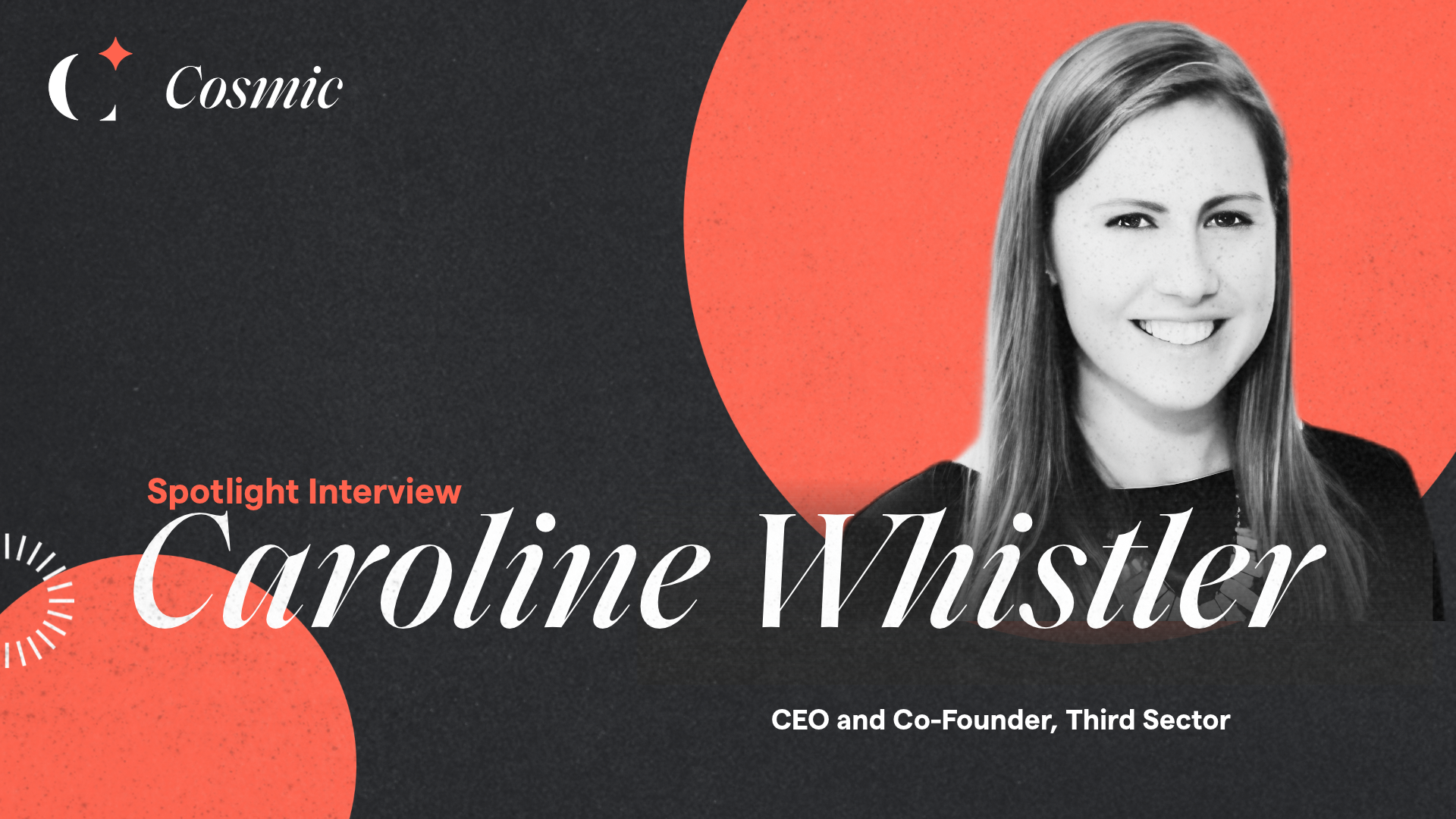
Caroline Whistler has spent the last 15 years at Third Sector, the organization she co-founded to help state and local governments deliver more responsive services. She works with government partners, communities, local philanthropies and employers to agree on the outcomes that matter and adapt the evidence to local conditions. Her recent piece in SSIR made the case that the evidence-based movement is more complicated than the sector likes to admit.
She has no interest in throwing the evidence out. Starting from what has worked somewhere is essential, and the scientific method is good at forcing clarity on a hypothesis and the outcomes you want. What it leaves out is room to learn. A trial is a snapshot of one place at one moment, while people and communities keep changing. Nurse Family Partnership is her clearest example: a program with strong trial results whose effects declined over the years, funded in a way that rewarded sticking to the approved model and left no space to ask why families were dropping out.
The obstacles she sees are mostly structural: contracts that won’t pay providers who change anything, and data extracted for compliance reports and rarely returned to the people who could learn from it.
For executive directors, the work starts with asking who a program isn’t working for. For funders, it means paying for learning organizations as well as strong programs, and sometimes for changing the conditions around them. Caroline’s case is for discipline around the process of learning over loyalty to any single program model, and for building real relationships with the civil servants who hold many of the keys to better outcomes.
Episode Highlights:
[00:01:50] What “evidence-based” actually means
[00:03:20] How evidence-based became a federal policy priority
[00:05:35] Why a randomized controlled trial is only a snapshot
[00:08:20] The myth of the permanently proven program
[00:09:25] Nurse Family Partnership and the results that faded over time
[00:12:05] What the scientific method gets right, and what it misses
[00:15:55] Why evidence alone is not enough, but essential
[00:18:20] Contracts that punish providers for adapting
[00:19:25] Data as a one-way street
[00:22:40] Questions every executive director can start asking now
[00:24:15] How funders can invest in learning and changing conditions
[00:26:30] Where trust-based philanthropy fits with evidence
[00:33:35] Why nonprofits need relationships with civil servants
Notable Quotes:
[00:08:50] “It’s like a prescription pill that you can take and adopt everywhere else. And when it comes to people and human services, you just have to keep measuring.” Caroline Whistler
[00:13:45] “What communities ultimately want is not an evidence-based practice, they want better lives.” Caroline Whistler
[00:16:00] “Evidence alone is not enough, but it is essential.” Caroline Whistler
[00:17:00] “There’s no set it and forget it or, oh, this works somewhere else. We can assume it will work here. People are complicated, the world changes.” Caroline Whistler
[00:28:15] “The incorrect interpretation of trust-based philanthropy is that it’s all about just vibes and trust and that there is no room for evidence.” Eric Ressler
[00:33:15] “We can do better work if we center outcomes over centering programs.” Caroline Whistler
Resources & Links:
Third Sector — Caroline’s organization, helping governments deliver more responsive, outcomes-focused services
When Evidence Isn’t Enough: Caroline Whistler’s recent SSIR article on the evidence-based movement — mentioned at [00:00:45]
Trust-Based Philanthropy Project — the approach discussed at [00:25:55]
Designing Tomorrow J&E episode on the scientific method and design thinking — mentioned at [00:10:50]
P.S. — Struggling to align your message with your mission? We help social impact leaders like you build trust-building brands through authentic storytelling, thoughtful design, and digital strategy that works. Let’s talk about your goals »
Eric Ressler [00:00:40]: Caroline, welcome to the show.
Caroline Whistler [00:00:45]: Thanks for having me.
Eric Ressler [00:00:45]: Yes, I’m so excited for this day. So backing up, the reason that you’re here today is because you penned an article in SSIR basically talking about how a movement towards evidence-based work is a little bit more complex than we’ve all been giving it credit for. Before we get into all that though, can you give our listeners just a little bit of background around yourself, who you are, the work that you’ve been doing, how you got to this point of penning this article?
Caroline Whistler [00:01:15]: For sure. So I live out in California with my family, and for the past 15 years I have been working at, co-founded, and have been in the work with an organization called Third Sector, helping our governments to deliver more responsive services to communities. The way we do that is by showing up with our state and local government partners, with the communities they serve, with local philanthropies and employers to align on outcomes that matter, look at the evidence as to what works, and then think about how to adapt that to get to ongoing better outcomes and improvements for their own constituents and their communities.
Eric Ressler [00:01:55]: Okay. I want to start with a really fundamental basic question. What does it actually mean to be evidence-based? Is there some kind of certification you get for that? What does that term actually mean? Who determines whether or not something is evidence-based? Let’s just start there.
Caroline Whistler [00:02:05]: Oh gosh, it’s a great question. So there’s an academic version of evidence-based, which shows have you set up a rigorous evaluation, with the gold standard being a randomized control trial. But basically, have you created conditions to evaluate, usually with some folks who get an intervention and some folks who don’t, and did you rigorously evaluate and try to isolate what exactly about the intervention made a difference in somebody’s life? And then have you codified that and have you been able to replicate that in other places? So evidence-based, at least for social services, social sector work, can often mean having a program plan, an intervention plan, and then rigorously testing that by giving some folks that intervention and some not to see if it works at achieving the intended outcome goal.
Eric Ressler [00:03:05]: And the goal of that being to assess and evaluate if an intervention is actually effective or not.
Caroline Whistler [00:03:10]: For sure. Yeah. We all want to find what works because certainly whether it’s our governments or our communities, we want to figure out what works and do more of those things with our taxpayer dollars or the limited time we have.
Eric Ressler [00:03:25]: Yeah. Okay. I love that definition, it tracks, it makes sense. And my sense, just being in the sector and observing it, is that maybe 10 years ago, five years ago, there was this peak evidence-based moment. It was this term that you would see: oh, this is an evidence-based intervention or an evidence-based program. What’s your sense around what led to that? Do you agree that that was around the timeframe that happened? Do you feel like it’s growing? What’s the state of this and what led to this becoming more central in the dialogue in the space?
Caroline Whistler [00:04:00]: Yeah, I think certainly around 10 years ago, or even in the early 2000s, it really became a policy goal. Whether it was the George W. Bush administration or the Obama administration, there was a real focus on funding what works, evidence-based practices. And that focus at the federal level around codifying and defining what an evidence-based practice is, and investing federal dollars in those, I think really contributed to a lot of organizations trying to do that evaluation work to get certified as evidence-based so they could tap into a large amount of that public funding. So that’s the history of it. And I would say the current state is that we still have a strong desire to invest in evidence. You see recent policy changes with Workforce Pell, setting clear outcome goals, job placement, wage increases, new acts in Congress, the Evidence-Based Grant Making Act and others. So it’s certainly not going away. It’s growing and is certainly a big part of the federal policy and state and local policy conversation today.
Eric Ressler [00:05:10]: So taking this idea of evidence-based work at its core in good faith seems to make a lot of sense. It’s like, hey, we want to make sure that especially when the government, but even when donors are investing in interventions and we’re trying to do social good work and public good work that has high stakes, we want to make sure what we’re doing works. What, in your opinion, are we getting wrong about that approach, or how is it actually a lot more complicated than it sounds?
Caroline Whistler [00:05:35]: So first, I fully agree. We want to invest in what works. We want to find what works. We want to do more of those things. One of the things I’ve noticed after the past 15 years working with state and local governments trying to replicate some of those evidence-based practices is that context really matters. Doing the randomized control trial or getting that signature of evidence is oftentimes like a snapshot or a photo of: yes, you were able to achieve those goals in this place. But it doesn’t necessarily translate to different contexts, or sometimes the world changes, for example. So I would say what we’re getting right is this idea that we need to figure out what works. That is the right north star. We need to figure out what’s going to work to keep homeless people housed, what’s going to work to help people get employed at high wages.
And I think what has been harder to grapple with, particularly from a government and policy perspective, is the prescriptive way that policymaking happens around evidence, where they take that one snapshot of: great, someone got a great result. We did the randomized control trial in Texas. Now we’re going to write that up as a law and make sure that all 50 states have to do a program in that specific way. And this idea that prescriptions can lead to outcomes, I think that’s where we’ve fallen short a little bit, because we’re not acknowledging that the context really matters, the world changes, people are complicated, and a program that might have worked really well for certain people in a certain context may not translate to other places or forever more into the future, particularly with social programs where the interventions are often behavioral as well.
Eric Ressler [00:07:15]: Yeah. So to me, I see how this starts to get complicated pretty quickly, because a couple different things are going through my mind. One, this idea even of doing randomized controlled trials where humans are the subjects is thorny. When you think an intervention might work and you’re intentionally only giving that intervention to some part of the population, knowing that the other part of the population is not getting it. Now, I assume in most of these trials they’re getting other interventions or the gold standard of what was done before, but walk me through how policymakers and folks behind these interventions grapple with that.
Caroline Whistler [00:07:55]: Yeah, so oftentimes policymakers, well, I would say they’re not necessarily running the RCTs, but they are taking the information they get from those snapshots. So they’re encouraging philanthropy or nonprofits to do those experimentations, and then based on the results, they’ll say, “Oh, that worked well. Maybe we can take that as a policy, and we won’t require you to keep evaluating it because you’ve already gotten that gold standard once.”
Eric Ressler [00:08:20]: Interesting.
Caroline Whistler [00:08:25]: But really, the challenge is, yes, there are absolutely challenges in the evaluations around whether you’re denying services, this and the other. But I think the broader challenge is this idea that once you achieve that positive result in evidence, the assumption is that you will forever achieve that result, and that we need to stop measuring, or we don’t need to measure, because you’ve got the gold standard.
Eric Ressler [00:08:45]: It’s been proven. It’s proven forever now.
Caroline Whistler [00:08:50]: It’s like a prescription pill that you can take and adopt everywhere else. And when it comes to people and human services, you just have to keep measuring, because we’ve seen across the country that, unfortunately, strong evidence-based programs might not achieve the same results in different places if there are different conditions there.
Eric Ressler [00:09:10]: So do you have an example or a story or a case study of where an evidence-based intervention maybe worked in one place, and they tried the copy-paste, prescription-style approach somewhere else and it was not as successful?
Caroline Whistler [00:09:25]: Yeah, so a couple of examples. One that I like: there was a very strong, very large federally funded program called Nurse Family Partnership. They did a lot of randomized control trials in different places over time and saw strong results in terms of keeping moms in the program, reducing preterm births, et cetera. They got those RCTs and ended up using them to secure a lot of public funding. But as the years went on, folks were noticing that the nurses in these programs were doing the program in the same way, but they weren’t retaining families in the same way, and they were actually getting different outcomes and results. Rather than having space to be curious and say, “What’s going on? What could we do to change the program?” the way the funding worked, there wasn’t really space for that curiosity.
The funding was based on “Are you doing the program as it was approved and defined in this evidence-based study?” versus “Are you learning what’s going on in the context and thinking about adapting this evidence-based program to what it takes to get to results for these particular communities?” And so that was a case where they actually saw the effects, even in randomized control trials, decrease over time for a program that had very strong effects and evidence, and they decreased as the world changed and the context changed.
Eric Ressler [00:10:55]: So I think this is a good segue. Jonathan and I actually just recently did an episode about what in our sector we should and can take from the scientific method, and what we should take and maybe leave from design thinking methodologies. And what I’m hearing is that this evidence-based approach is borrowing a lot from the traditional scientific method, having randomized controlled trials, et cetera. And the shortcoming is maybe where we might be able to leverage some of what I think design thinking is so good at, which is acknowledging that these problems are wicked and difficult to put a blanket over and say every problem like this is going to work the same way, and instead being much more willing to lean into the unknown and into the specific circumstances of any given community. So how do you think about those different frameworks, if at all, and what does a more forward-looking evidence-based approach look like in your mind?
Caroline Whistler [00:12:05]: I would agree that a lot of our social science work is based on a more traditional evidence-based approach from the hard sciences, if you will. What that really gets right is having a strong hypothesis and clarity of the outcomes that you want to achieve, which I think is really important for every community that wants to improve people’s lives: to get clear on how you want to improve people’s lives, what that would look like, and be very explicit about that. What we have learned is not enough with that scientific method is really being able to build in the space for that learning, for understanding context, and that learning and improvement. Because if you think about it, and we work with state and local governments, their goal is to deliver results for their communities, not one day, not next week, but on an ongoing basis. And in order to do that, you actually need a feedback loop around the work that you’re doing. How are you listening to the folks that are receiving the services? How are you learning about who this is working for and who it’s not working for? What are the other conditions going on in our community right now that may or may not be affecting the outcomes here? And then how are you taking that in and adapting the service delivery model or the programmatic intervention to respond to those conditions? The scientific method is great for setting out the hypothesis, great for setting out the clarity around that initial stake in the ground to try, but a lot of times the evaluation structure doesn’t allow for the responsiveness or the learning that our communities need, because what they ultimately want is not an evidence-based practice, they want better lives. They want results for their communities. So that’s a little bit of the difference.
And design thinking has been really helpful for a lot of our public sector partners, helping them understand what it means to listen to their communities: that it’s not an info session, that it could look more like an ongoing body and more of a co-governance approach to thinking about what our goals are and how we align our resources. Design thinking has also been helpful to adopt a test-and-learn approach a little more quickly. Public systems, state and local governments, are pretty risk averse. Test and learn is kind of scary, whereas going with an off-the-shelf evidence-based approach may feel safer and maybe more defensible, even if it doesn’t actually get the same results for your community members.
Eric Ressler [00:14:45]: And I could imagine that the people behind those decisions, of course they want the best outcomes for their community. And also, they want to make sure they’re making a smart, trusted choice. So if they see a gold standard evidence-based program that looks like it has the right shape, why wouldn’t they reach for that? And they might even think, “We don’t need to do tests. We already have a sense of what is right here, so we’re going to go for that intervention.” What I’m hearing you say, though, is that just having an evidence-based mark on any given intervention is not really enough, unless the conditions are close enough that you can make a good judgment and say, “Hey, we’re pretty confident. Although this evidence-based program wasn’t run in this exact community at this exact time, there’s enough of the same shape of this problem that it’s probably going to work.” But I do wonder, if you are in that position, how should you evaluate reaching for an existing evidence-based program versus building your own set of experiments with more of a design thinking methodology?
Caroline Whistler [00:15:55]: Well, again, it all starts with what you want to achieve. And our recommendation is that evidence alone is not enough, but it is essential. So say you want to increase stable housing or reduce recidivism for a population. If those are your community goals and you’ve gotten specific about for whom, our first stop is always to look at the existing evidence. What are the existing services that have actually been shown anywhere to make a difference? Let’s start there. This is not “let’s throw spaghetti at the wall” or create something totally new. There’s been enough work done in the social sciences that you should always start with the evidence base that is there. Use that to help build the hypothesis, informed by your providers, your community members, your particular context. And then the most critical piece is that it’s not “look through the library and pick the one that feels best.” It’s look through the library, pick the ones that feel the most resonant, build the model that you think has the best chance of working, and then you have to measure. You can’t get out of the measurement side.
There’s no set it and forget it or, oh, this works somewhere else. We can assume it will work here. People are complicated, the world changes. So the biggest piece is how you build the infrastructure around evidence so you can understand what the conditions are in your community and what’s working. A big part of that infrastructure is setting the goals and seeing what success would look like. What’s your data and measurement plan? How are you going to collect that data, talk about it, look at it, and make changes as you go to ensure you’ve got the greatest chance of hitting those outcomes, using the existing evidence base and your local context?
Eric Ressler [00:17:40]: So in your experience, where is this process falling apart? Because when I hear you outline it like that, it makes really good logical sense. Hey, if we have a problem, the first thing we’re going to do is look and see how other people solved it and draw inspiration, if not heavy inspiration, from that. Then we’re going to implement it, see if it worked, measure, and iterate from there. That seems like a very logical approach to doing this work, but that’s often not what happens. So what are some of the main scenarios or flavors you see where that ideal process falls apart?
Caroline Whistler [00:18:20]: Yeah, so there are a couple of structural pieces that make it difficult. One is actually around contracting. We do a lot of work around outcomes funding, helping communities set those outcome goals and processes, and give providers flexibility to build off an evidence-based practice and adapt it. Many communities don’t have that flexibility. Or for many governments, it’s “No, no, no, we’re going to prescribe.” They’ll say you’ve got these outcome measures or metrics, and oftentimes they’re outputs, and in a cost reimbursement way they describe, “You must do X, Y, Z to achieve these goals.” So essentially they’re tying providers’ hands behind their backs: yes, we’re going to try to measure on an ongoing basis, but we’re not going to let you change anything.
Eric Ressler [00:19:00]: Yeah, that’s the purpose.
Caroline Whistler [00:19:05]: Yeah. Well, we won’t pay you if you change something. You can change something, but we won’t pay you. So some of those payment incentives are structurally what prevent ongoing learning from happening. Another thing is data: data quality, and data for learning and improvement. I think this is a known problem for a lot of state and local governments. Data is a one-way street. They extract it from providers and communities in reports for compliance purposes, and they’re not necessarily talking about it, looking at it, seeing how they can learn and improve. So it’s easy to say that you want to use data for learning and improvement. Sometimes the right data’s not getting collected, or providers and communities don’t have access to that data until after a contract is done, so they can’t even know how they’re doing or how they could improve. Some of those hurdles, like the legal ones, need to be myth-busted a little bit, but there are processes and standard operating procedures that need to change within our state and local governments to make the data more integrated and more available to governments and communities, so they can do the sense-making and the changing to see if their evidence-based programs are working.
Eric Ressler [00:20:30]: Hey friends, real quick before we continue today’s episode, I’m Eric Ressler, founder and creative director at Cosmic. Cosmic is a creative agency purpose-built for nonprofits and mission-driven organizations. For the last 15 years, we’ve helped leaders like you nail your impact story and sharpen your strategy, but we’re not here to just leave you with a fancy slide deck and a pat on the back. We roll up our sleeves and help you bring our ideas to life through campaigns, creative and digital experiences. Our work together helps you earn trust, connect deeply with your supporters, and grow your fundraising and your impact. If you value the thinking we share here and want it applied to your biggest challenges, let’s talk at designbycosmic.com. All right, back to today’s conversation.
So what I’m hearing is that there are oftentimes structural issues with how the contract, so to speak, or even literally the contract between the provider and the government or the funder, is set up. And we see this in the philanthropic space too, with non-government funders: how foundations or even major individual donors are sometimes asking boots-on-the-ground providers to report back and gather data, or maybe there’s a grant for the intervention but no budget allocated to measurement and evaluation. Or even if there is budget, it’s more of a retrospective or a postmortem, and there’s no room for feedback and iteration cycles. So that’s one big flavor of that. I’m sure there are others, but I actually want to ask: if a listener is an executive director or one of the implementers of these interventions, maybe a program officer, whatever, what can be done about this? How can we empower our listeners to take some of this learning and say, “This sounds great. We should change these things. That’s a long-term project. I have to deliver next month for my constituents. What can we do in the seat, so to speak?”
Caroline Whistler [00:22:45]: So depending on what seat you’re in, I think it starts by making these implicit challenges explicit. Let’s start from the executive director of a nonprofit side. You’re implementing an evidence-based program. Ask the questions: How am I using data? Do I have access to data? If I do not, how am I going to my funder to say, “This is a problem. We need access to this data for ongoing learning”? If I do have access to data on the outcomes and measures that matter, how am I using it? How are we talking about it as a team? How are we talking about it with our communities and our other key stakeholders to influence our decision-making? So I would start there. And some of the questions you could ask are: Who is my program not working for, and what might we learn about that? What are some of the conditions or things going on outside of our one program that might be influencing the intended outcomes for an individual? That could surface some really fertile ground to then have specific conversations with your funders, your local governments, and your key stakeholders about what in the conditions or the infrastructure might need to change to make your evidence-based practice and your intervention more successful. Who might you need to be in relationship with? How might you need to approach this problem differently as a broader ecosystem outside of your one nonprofit?
Putting on the funder hat, I would say think about how to support not just a strong program, but learning organizations. So being able to provide some of that flexible funding to say, “Yes, I’m curious if your program worked this year with these people, but also, what are you learning about the contours of your program, or the things that are changing in the environment, about where you’re most successful and why?” Investing in that type of learning is really important. Also, as a funder, you have the opportunity to invest in programs, but you can also invest in changing the conditions that might help make your program and others more successful. For example, I mentioned some of the structural issues around how nonprofits get paid, which can influence the type of work they’re able to do to learn and adapt. As a funder, if nonprofits are contracting with the government, you could provide support to help that government shift how it actually pays nonprofits. California actually did this a couple of years ago. Funders supported advocacy to change the payment terms, because California was paying long after services were delivered and nonprofits couldn’t metabolize that. So that’s changing a structural condition that can help both build evidence and support the learning and improvement needed to make sure you’re achieving those outcomes on the ground for folks.
Eric Ressler [00:25:55]: I want to zag away from this theme just a little bit into something I’m curious about. There’s this rigorous evidence-based argument, especially around funding and interventions. And coexisting with that is this idea of trust-based philanthropy. I don’t think those things are at odds with one another, but I do wonder what we should be taking from both of those. My sense is that the best-case scenario is that there’s some Venn diagram there, and the overlap is what we should be aiming for, but I’d love to hear your take on that.
Caroline Whistler [00:26:30]: I love that idea, actually, of bringing more of trust-based philanthropy into the room, because what we’ve noticed in our work is that trying to get to better outcomes in your community, whether that’s for homelessness, workforce development, et cetera, is a systems change effort. You need the interventions and you need the structural change. You also need the relational change, and trust-based philanthropy fits in there, as well as shifts in mental models around: wait a minute, what is our community about? What is our government for? What are the roles of each of the players in our community to get to better outcomes? So I think trust-based philanthropy plays a pretty critical role in modeling for government and other players what it looks like to anchor on a shared vision and shared north star outcomes, and to give some flexibility on the program side for folks to adapt and learn. In my mind, that still means holding that north star and measuring towards the outcomes and metrics that matter, but giving programmatic flexibility that often does not exist in our public systems right now because it’s scary. It feels like, “Whoa, we’re not sure exactly what they’ll do.” But I think trust-based philanthropy can be a real model for other players in the ecosystem of what it looks like to be in relationship with those proximate to the problem, define with them the goals you’re looking for, and then trust them to adapt the evidence-based practices, while holding those north stars clear and measuring and evaluating towards them over time. So I’m glad you brought that up. That’s a really interesting connection.
Eric Ressler [00:28:10]: Yeah. My sense is that the incorrect interpretation of trust-based philanthropy is that it’s all about just vibes and trust and that there is no room for evidence, or that evidence is counterproductive to that modality, which I don’t think is the intention behind trust-based philanthropy. And talking more about some of these structural issues, what I see often in my work is that the orgs critical to running these interventions are not set up to be sustainable in and of themselves. Funding streams in for a particular program, salaries are set, and often salaries and all overhead costs are set by the funder. There’s this balance between flexibility and rigor, and I think both can coexist. To me, that’s the spirit of what trust-based philanthropy is pointing to: we need to, like you said, co-design with communities and trust the implementers who are closest to the problem, instead of a more hierarchical, top-down approach where all of the power and oversight, and the dynamics of that power and oversight, come down from the funder. When we talk about relationships and doing this work in the best of faith, we need to find a balance between evidence and trust and experimentation and rigor. In my opinion, when you look at the best, most successful interventions, however they did it and whatever methodology they attached to, those are some of the ingredients that are integral to interventions actually working.
Caroline Whistler [00:29:55]: Yeah. The one addition I would have to that is that we’ve noticed that having rigor around the process of learning and improvement is really important: codifying that rigor in setting your outcome goals, what that looks like, and how you’re going to measure it, but also the rigor of process in what we’re learning, how we’re making adjustments, who this is working for and who it isn’t. That’s not a programmatic requirement per se, but it’s a process requirement. If you’re a people-serving organization or a people-serving government, you need to be committed to continuing to be responsive, to continuing to get feedback from those who are experiencing your services, and using it, talking about it with relevant stakeholders in your agency and across agencies, and using it to learn and improve. As I’ve gone through this work, I keep thinking, gosh, if we can have more of that discipline on the process versus fidelity to a particular program model, I think that might help our communities, and certainly our local governments, be more responsive to the communities they serve.
Eric Ressler [00:31:10]: I love that. Are you familiar with the term kaizen? Do you know that term?
Caroline Whistler [00:31:10]: Yes.
Eric Ressler [00:31:10]: Yeah. Kaizen, for our listeners who might not be familiar, is a Japanese term. I hope I don’t butcher the exact definition, but it essentially means continuous learning. It’s one of our values at Cosmic. It’s actually one of the few values at Cosmic I can remember based on what’s on our website. But it’s so true to how we need to approach these problems that are so dynamic, so fluid, ever-changing, because they are systemic in nature. Culture is always moving. The nature of the problems and the environments of those problems are always in flux. So it’s obvious on the surface that we need to constantly be improving and learning and measuring. And it’s interesting to hear your perspective and experience around where that breaks down. Because my sense is that almost everyone in the space would resonate with that. Of course we need to continuously learn and improve and measure, but there are all these constraints or barriers or bottlenecks that make that impractical, because of the structure that’s set up, or the circumstances, or the funding, or a combination of all of those things. So to me, conversations like this are so important to have, in hopes that they will influence the people who have the ability to change those systems at a meta level, whether that’s you as a program officer at a major foundation or someone in government who’s in charge of getting this money out the door, thinking about how policy happens. I feel like this is one of the most important things the sector needs to continuously be thinking about. So I appreciate you coming to the studio and breaking down some of your thinking. Before we wrap up, Caroline, is there anything you would recommend folks listen to or follow outside of this podcast? How can people get in touch? Plug your work away at this point.
Caroline Whistler [00:33:00]: Well, I’ve appreciated this time to talk about the evidence-based movement as more of an evolution of where we need to go with continuous improvement, versus a throw-it-out revolution. We’ve done good work. We can do better work if we center outcomes over centering programs. So big fan of that. A couple of other things: you can check out the work Third Sector has been doing on our website, www.thirdsectorcap.org. But my bigger call to folks would be to be in community with your civil servants and your public systems. I come from the nonprofit sector, and I also do a lot of work in philanthropy, and it’s not always the case that those folks are in community with their local county, state, or even city civil servants who may be working on very similar issues. So my call to action is this: our state and local governments are often the largest or one of the largest co-funders of social services and of the change we want to see in communities. Engage with them and build relationships with them, because they hold the keys to a lot of the structural and relational change that needs to happen in order to unlock better outcomes for our communities over the long haul. So that’s my call to action there.
Eric Ressler [00:34:30]: I love that. I think that’s a beautiful place to wrap up. Thank you so much for your time today, Caroline.
Caroline Whistler [00:34:35]: Thank you, Eric.
Eric Ressler [00:34:35]: If you enjoyed today’s video, please be sure to hit like and subscribe or even leave us a comment. It really helps. Thank you. And thank you for all that you do for your cause and for being part of the movement to move humanity and the planet forward.