


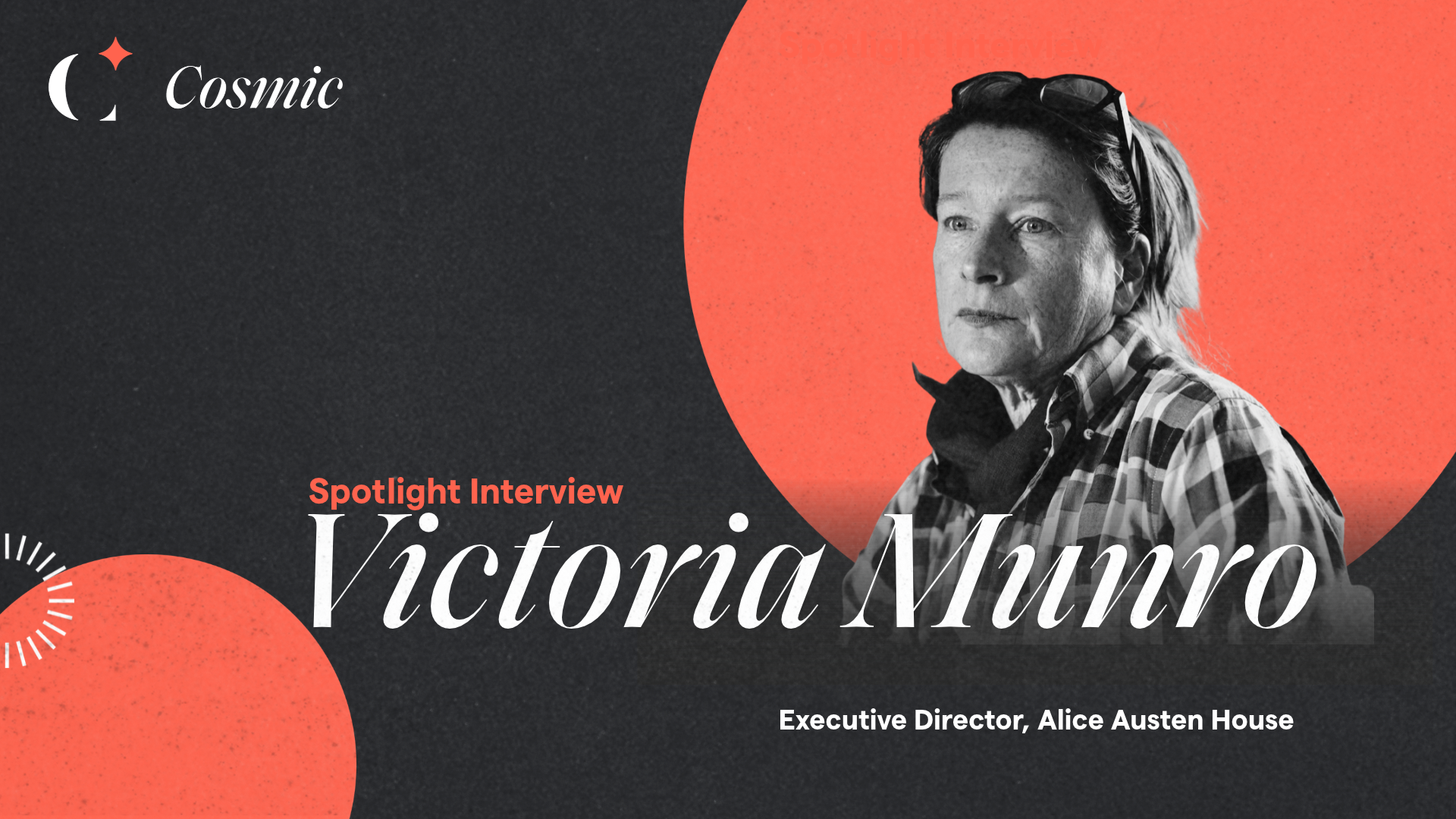
Plenty of people still picture a museum as a quiet building with art on the walls, a ticket desk at the door, and a staff whose job is to guard what’s inside. Victoria Munro thinks that picture is out of date, and she also sees an advantage in it. Because the outside world assumes museums are harmless, they have a lot of room to do serious work on social change and safe space.
Victoria is the Executive Director of the Alice Austen House in New York City. Originally from New Zealand, she came to the US at 21 to study, moved from sculpture into photography, started an artist-run gallery early in her career, and later earned a master’s in arts education. She’s also board president of the Museums Council of New York City, which brings together more than 120 institutions of every size.
When she arrived ten years ago, the museum was interpreted as a historic house, filled with period furniture that never belonged to Alice, and the rooms were roped off so a class of fourth graders couldn’t even walk inside. All the while, the museum held more than 8,000 photographs by its namesake, a lesbian photographer who took 50 pounds of equipment onto the streets of New York on a bicycle in the 1880s and built safe spaces for her largely queer circle of friends. Victoria took the ropes down and let Alice’s own work tell the story.
That history shapes how the museum operates today. As a nationally designated site of LGBTQ+ history that looks, from the outside, like a small house in a waterfront park, it can offer programs people join without outing themselves. Victoria designs programs people come back to until they’re co-creating them, and she takes programming out into the park for families who don’t feel welcome in museums yet.
She and Eric also get into why so many art lovers hesitate to call themselves creators, why a yearly budget should be aspirational, and why the reflection that keeps a leader going can’t happen alone.
Episode Highlights:
[00:01:55] From sculpture to photography: portability, personal archives, and the family snapshot
[00:04:25] Why a background in education makes for a stronger museum leader
[00:07:20] Museums as sites for contemporary connection
[00:08:55] The yearning for in-person experiences people can take home
[00:10:55] Why art lovers hesitate to call themselves creators
[00:11:25] “Sneaky” programming that turns visitors into co-creators
[00:12:40] A safe space that doesn’t look like one: LGBTQ+ history in a historic house
[00:13:45] Programming for people who aren’t ready to cross the front door
[00:16:20] Taking down the velvet ropes at the Alice Austen House
[00:19:45] Alice Austen, one of the first women to take photography onto the street
[00:30:20] Budgets, strategy, and leadership as creative acts
[00:36:55] Staying motivated through professional community
Notable Quotes:
[00:07:20]: “We need to look at museums as being not just repositories of historical collections, but being spaces that are sites for contemporary connection.” Victoria Munro
[00:13:05]: “Coming and participating in one of our programs isn’t going to out you.” Victoria Munro
[00:17:00]: “Really, what was that chair saying to that fourth grader? Nothing. Absolutely nothing.” Victoria Munro
[00:30:20]: “Your yearly budget should be aspirational. It should be based in reality, but there should be things that you are aspiring to.” Victoria Munro
[00:33:14]: “Maybe one of the most important elements of creativity is imagination, the ability to imagine something that isn’t yet here.” Eric Ressler
[00:38:15]: “You can’t do all that reflection on your own. You’re not going to be effective at reflecting all by yourself.” Victoria Munro
Resources & Links:
Alice Austen House — the museum Victoria leads, with event listings and information on Alice Austen’s archive of Victorian photographs
Museums Council of New York City — the association of NYC museums where Victoria serves as board president
P.S. — Struggling to align your message with your mission? We help social impact leaders like you build trust-building brands through authentic storytelling, thoughtful design, and digital strategy that works. Let’s talk about your goals »
Eric Ressler [00:01:05]: Victoria, thank you so much for joining me today.
Victoria Munro [00:01:10]: Oh, it’s such a pleasure to be here.
Eric Ressler [00:01:15]: So I think where I’d like to start today is to dig into your experience both as a museum curator, now a museum executive director, and specifically a lot of experience around photography as an art form. And I would just be curious to hear your point of view, your take on how all of those different elements, both museums, photography as an art form, and your experience as an executive director, have informed your point of view on the role that that art form and museums in general have to play in the broader social impact ecosystem.
Victoria Munro [00:01:55]: Well, that’s huge because there’s several topics in there. I came to photography back in the 1990s. It was when I first came to America, actually. I’m from New Zealand originally, and I came over to the States when I was 21 to study. And I was making sculpture at the time, and it suddenly didn’t feel like a very transportable medium. It wasn’t making a lot of sense to me, but I was also at the same time really digging into all of the facets of photography from a more philosophical standpoint and doing a lot of reading and research around the way humans adopted photography so quickly and this idea of an accessible way to create your own personal archive, and all of these autobiographical stories that were happening and family histories around photography. Plus at that stage, digital photography was still not widely adopted and I didn’t have a smartphone or anything like that. And I was completely fascinated by the sheer volume of photographs that were being developed worldwide every day and the endless possibility to multiply that in itself. Everything became a copy. And so it was part this idea of memento, also traveling, being away, portability of an art form, and then the way in which photography has become such an important tool for documenting our past.
So I was really fascinated by that. And very early on in my career, I started an artist-run gallery, so instantaneously walked from being in art school to curating exhibitions and traveling with the exhibitions. And so after many years of making work, I also along the way got my master’s in arts education. And I think in terms of leadership, having a really, really strong, solid background in education is crucial for designing programs, understanding the materiality and the reach and the impact of programs. But also when I talk about education as a tool for leadership, it really helps you to work with staff at all different levels of their career and really think deeply about how you might foster learning within the workplace. It shouldn’t just stop at, you have a position description now, here you go. No, no way.
And then on the museum side of things, so yeah, we’re talking about this history of curatorial work, that also leans into a really deep passion I have for supporting artists. As an artist myself, I understand the struggle and the barriers that there are to potentially getting representation or just getting eyes on your work. And one of the most helpful things for me was being asked to lecture in a program that was around professional practice for art school students, being there and talking with them about how the dealer gallery is not the be-all and end-all. The big show is not. How do you create other ways to be seen? What is a gallery? It could be a zine. It could be something as simple as you’ve gone to, I’m going to sound old, Kinko’s and Xeroxed off a whole bunch of work and distributed it for free. You have to think outside of the box and you have to be scrappy and prepared to say, “I’m going to put in my own time and my own effort, but then hopefully find collaborators out there.” And so the key within this environment of being an executive director, I feel, is that multi-tiered role of being able to support staff, artists, your contributors, the broader community and other organizations, as being that highly collaborative model that is going to be an awesome tool for you.
And also as a lifelong learner, that’s really going to feed your practice in so many different ways and it’s going to keep you motivated. And I do think that we need to look at museums as being not just repositories of historical collections, but being spaces that are sites for contemporary connection within that storytelling of what is history. It gets dormant if it’s not activated by an intergenerational group of people coming in and benefiting from it, which we could talk a lot more about, which is what I’m really interested in, is how museums can actually be a force for change.
Eric Ressler [00:08:05]: Well, let’s stay on that thread then for a little bit. And it sounds like this is something that you’ve thought deeply about, and I’ve been thinking more about this also in the current state of the social impact sector, movement, whatever you want to call it, where there seems to be culturally a magnetism back to in person, back to gathering in person, whether that’s through cohort-based learning or offsites or professional development opportunities, all the way through just this cultural yearning for the return of some kind of third space in our culture. So what are your thoughts around the role that you see museums playing? How are you thinking about that as an executive director of a museum? What’s on your mind there?
Victoria Munro [00:08:55]: Well, I think for one, yes, there is a great yearning for that in-person connection. I think that everyone has become extremely exhausted from consuming so much of culture online, but also consuming, period. And so there’s this much greater desire, again, to have what it is that you’re consuming be the experience. And a lot of that really meaningful experience happens in person. And so creating programs that are able to activate that. I love it when there’s programs that happen in museums that people also have a take-home product. It’s something that they’ve actually been able to create themselves.
Eric Ressler [00:09:55]: That strikes me as an interesting two sides of consumption and creation, and they often reinforce one another. And I think about my own various journeys as an artist in different forms and most specifically around music. When consuming music, it inspires creation. And then the act of creating music inspires me to want to consume more and learn from some of the greats and get inspired by other people. I think this is just inherent to being part of an art scene. What I’ve noticed, and this is something I haven’t personally struggled with just because of the nature of my essence as a human, I guess, but I know a lot of friends who are avid consumers, but they’re almost afraid, or there’s some kind of block to identifying as a creator. They don’t seem to be able to make that leap. Why do you think that is?
Victoria Munro [00:10:55]: I think that people have a lot of insecurities around being able to feel like they’re a part of an arts community, and so they feel a degree of comfort saying, “I’m at the level of...”
Eric Ressler [00:11:05]: Supporter.
Victoria Munro [00:11:05]: Or listener, viewer. It goes back to part of the first part of the question and thinking more broadly about the roles that museums play in people’s lives. And I think that it’s an interesting area because you can actually be quite sneaky with your programs. And I do like to say it’s a little sneaky. You actually are having someone becoming involved with a program, and maybe it’s a program that they can also revisit, come back to. It’s multi-tiered, it’s quarterly or something like that, kind of offering at the museum. And before they know it, they’re becoming a creator. They’re co-creating the program.
But on another level, what I like to talk about is there’s ways in which the outside considers what a museum does and what you can actually do with your programming that is quite wild, because there’s an assumption that we’re just historical gatekeepers or just putting these shows on the walls and charging admission. It allows you quite a lot of freedom to do quite a lot of important work within social change and creating safe space. So of course the museum that I currently am the executive director of is a nationally designated site of LGBTQ+ history. But from the outside, we look like a small historic house located in a very picturesque waterfront park. So coming and participating in one of our programs isn’t going to out you. It’s not going to be a scary step over a threshold of potentially a pride center, which of course, all of those things are really important spaces and places, but you are able to participate as an ally or as a queer person in this totally safe space.
And that’s really, really important to me. Obviously for some communities that haven’t historically felt welcome in museums, there’s another whole tier to inviting those communities. And I believe that a lot of that can also take place by not having an expectation to cross the threshold of the front door. So what are you doing in other ways where you are collaborating with other community groups? Or if you’re fortunate like me, I have a public park, so I’m able to activate the outdoor space without entering into that with an intention of making someone visit my museum. No. How am I going to provide a program that would be beneficial for someone who doesn’t necessarily feel welcome in museum spaces or has fear around them, but with the hope, obviously, that one day you can break down some of those barriers for that family? So doing that in all different ways with programming that’s beyond the museum walls.
Eric Ressler [00:14:55]: My sense in doing some work with museums and just observing the space is that there’s been a trend, almost a reinvention of the role museums and place-based organizations, especially social impact focused organizations, can offer outside of the traditional, maybe even reductionist view that museums are just places to put art on walls and charge admission fees to come participate in, and that’s the extent of it. What’s your view around what’s changed, or is that just a misunderstanding of what museums have always been, to think of them that way?
Victoria Munro [00:15:40]: No, I think it has changed. I really do. I think historically, and there’s still some museums operating in this way, there’s a more elitist culture around museums and an assumption that those who visited museums were art historically trained or had the ability to appreciate what was on the walls, rather than this role of saying, we have something wonderful that you may want to see and engage with, but we are going to really think deeply about what’s going to make that or activate that engagement.
So when I started 10 years ago with the Alice Austen House, it was presented as a historic house. It was filled with historic furnishings and there were roped-off rooms. There was no way in which you could have a class of third, fourth graders come in, even physically, into those spaces. And to me, obviously I love historic things. I think historical furniture is wonderful, but really, what was that chair saying to that fourth grader? Nothing. Absolutely nothing. I wanted them to be able to walk into the rooms. You have this architecture of the historic space that is giving that very place-based experience. But if you can’t walk inside and be a part of it, that’s going to be very difficult for you to connect at all or feel welcome. Velvet ropes, I don’t like them.
Eric Ressler [00:17:35]: Yeah, they don’t feel very welcoming. Yeah.
Victoria Munro [00:17:40]: Yeah. So how do we think differently about interpreting some of these collections? Perhaps we put less on show, we allow people to walk around them. I also don’t necessarily think that recreating a historic room is necessarily the best use of a museum space. And that’s where that fortunate element often of photography, or even painted, some kind of documentation of what it was like, you don’t have to do a historical reenactment to bring it to life. Please do not have your staff wandering around in pilgrim clothes. That very rarely is going to work. There’s certain things like engaging in maybe some candle making or butter churning that will be really, really fun for the audience because they are participating. But then again, wow, am I so fortunate? I have a bank of 8,000 or more photographs and a namesake of this museum for whom this home was her muse. It was her studio. And so she documented it over and over again. But why, only 10 years ago, was it being interpreted with furniture that wasn’t even hers? Yes, it was period, instead of just using the photos.
Eric Ressler [00:19:05]: They tell the...
Victoria Munro [00:19:05]: Story.
Eric Ressler [00:19:10]: Through her lens too.
Victoria Munro [00:19:10]: Absolutely. Through the lens of a lesbian woman who was an absolute badass. And this is super cool, all of these things that our namesake did to create safe space for her and her largely queer circle of friends, and documented it. It’s amazing. I need the space to show that.
Eric Ressler [00:19:40]: Yeah. And please correct me if this is wrong, but in doing research for our show today, I understand that Alice Austen was potentially the first female street photographer to exist. Is that true? To take the camera out of the studio setting, which was very unheard of at her time?
Victoria Munro [00:20:05]: Yeah, one of a handful of women at the time. So just to be really clear, there were women and there was encouragement for women to enter into the field of photography, but it was all studio based. It was really thought that women had a much more sympathetic way about them to photograph children and create these images of motherhood and femininity. And Alice was taking upwards of 50 pounds of photographic equipment onto the streets of New York City in the 1880s and ‘90s on a bicycle, and obviously was just an incredibly confident person because she had to win the trust of her subjects. It’s not like you could take a snapshot incredibly quickly. But yeah, there was no genre or field of photographic journalism at the time. So yeah, she’s a true, especially for women, a pioneer of the medium in this way, in a very social way, and was also hired on assignments to document the quarantine stations on Hoffman and Swinburne Islands, which people don’t even learn about. They only hear about Ellis Island during a time when immigration was at its all-time high in New York City.
Eric Ressler [00:21:35]: Right.
Victoria Munro [00:21:35]: Yeah, it’s really incredible.
Eric Ressler [00:21:40]: Hey friends, real quick before we continue today’s episode, I’m Eric Ressler, founder and creative director at Cosmic. Cosmic is a creative agency purpose-built for nonprofits and mission-driven organizations. For the last 15 years, we’ve helped leaders like you nail your impact story and sharpen your strategy, but we’re not here to just leave you with a fancy slide deck and a pat on the back. We roll up our sleeves and help you bring our ideas to life through campaigns, creative, and digital experiences. Our work together helps you earn trust, connect deeply with your supporters, and grow your fundraising and your impact. If you value the thinking we share here and want it applied to your biggest challenges, let’s talk at designbycosmic.com. All right, back to today’s conversation.
So how do you think about, as a curator, as a program designer, that balance of celebrating this rich history, this view into a different time, a different way of being, a different social circle that’s very, very unique, but also very relevant to our time right now, and also tying that together in a way that doesn’t feel like that exclusive gatekeeping version of what a museum can sometimes be or has been in the past?
Victoria Munro [00:23:05]: Well, you said it. It’s relevant now. So the example that Alice and her work left us was pretty phenomenal. So if we follow the themes in her work and her life, they’re super relevant today. It’s a riches-to-rags story. She ended up in the poorhouse.
Eric Ressler [00:23:35]: That’s right.
Victoria Munro [00:23:35]: Stripped of all of her possessions, separated from her life partner, Gertrude Tate, by poverty, and then eventually by some homophobia as well. She died in 1952, so it was hardly in the era that we could call progressive. In fact, I’d like to think she had more freedoms in the 1890s, because women were thought not to have a sexuality at the time. But yeah, there’s all these incredible themes in her work and parts of her story. She also grew up fatherless. So the Austen family was this large extended family that then also included some Irish maids and then all these animals. And so all of them I like to include on the family tree, because it’s much more a reflection of the way we live our lives now. But Alice set up all of these clubs that were safe spaces, and so we take that as the grounding model for the museum, that it is the safe space that she tried to foster and create. But then all of these themes in the work feed into the contemporary, mostly photographic arts programs. So no matter when you visit the museum, there’s a high-level contemporary exhibition on view, and all through the summer there’s outdoor photo exhibitions that are really providing a platform for more emerging artists at the same time. Yeah.
Eric Ressler [00:25:05]: You mentioned that you got your start as a sculptor and then moved to photography. Are you still shooting right now?
Victoria Munro [00:25:10]: Sculpture again.
Eric Ressler [00:25:15]: Sculpture again. Oh, nice. Full circle.
Victoria Munro [00:25:20]: Yeah. I have an art practice that is always informed by photography. It’s very interesting. But I like to take a medium, and I’m also very interested in painting as well, and see how that informs my sculpture. So there’s all these intersections between painting, photo and sculpture.
Eric Ressler [00:25:55]: Yes.
Victoria Munro [00:25:55]: And my sculptures are mostly wall-based. They mimic a lot of the forms and functions of painting. I’ve often made a lot of sculptures that are endlessly replicable. They’re all multiples. So the photography is always there, although I do have a new photo project that I would love to work on. It just hasn’t quite found its feet yet because, guess what? I’m very busy. It’s always the dream, right?
Eric Ressler [00:26:35]: Yeah.
Victoria Munro [00:26:35]: It’s like I could do it. I could support all of these artists, plan all of these exhibitions, because I absolutely love curating, and make my own work. And so my own work does tend to very much be on the back burner a lot of the time, although it’s not this year. I have a solo show coming up.
Eric Ressler [00:26:55]: Awesome. Congratulations. Yeah. Thank you. I resonate with a lot of that as a photographer myself. Across all the different artistic hobbies and interests that I have, photography is the one that is the most temperamental, in the sense that I will go years sometimes without picking up a camera that’s not my iPhone, and then I’ll have years where I shoot every day. And it’s just about what’s happening in my life and what I’m inspired by. And sometimes all it takes is stumbling upon just an incredible photograph that reignites that creative energy in me. It’s like, what am I doing? I need to be out there shooting. And I’ve gone through various phases professionally of shooting for commercial purposes and for our clients, which then usually leads to me not wanting to shoot as much for fun or as a personal passion. And then I’m also reflecting on what you said about the nature of how you see everything through that lens of photography.
And as I’ve explored various creative mediums professionally through design, also through photography, through music, and others as well, I’ve started to see all those different forms of creative expression as just, they’re all from the same root in my brain. And I think there’s this amazing cross-learning that happens, and I even think about this in music from one instrument to another. Me playing bass makes me a better keyboard player. Me playing keyboard makes me a better bass player. I think the same is true between painting, photography, sculpture, because you’re building that muscle and then you are inspired and applying it in different ways. And so I guess my point and then my question is, creativity seems to be a muscle just like anything else, and I don’t expect everyone to develop that muscle in the same way. Other people have interests that I don’t have that I’m sure are just as fulfilling for them, and interests or callings even at a deeper level.
But to me, I’ve learned that if I don’t have time in my life to give myself that creative time, I’m just significantly less happy as a person. And I feel this urge to embrace that and to share it and to invite other people to find what their version of that is, because it’s such an important part of, in my opinion, the human experience, and it gives people the opportunity to then go and share. So how do you see that in your own work, and how do you bring that to other people in this participatory framework and programming that you have at the museum?
Victoria Munro [00:29:40]: Well, that was a winding question, and I kept on having all these ideas while you were talking, and I was like, “Well, there’s that and there’s that.” And I think that it’s incredibly important within leadership and program development to be highly creative. As a museum leader, you’re a strategist and you’re writing budgets, but you need to be. A lot of these things that sound incredibly boring about the back end of your work aren’t actually, because they are visionary and creative and aspirational.
Eric Ressler [00:30:15]: Yes.
Victoria Munro [00:30:20]: Your yearly budget should be aspirational. It should be based in reality, but there should be things that you are aspiring to. I want to put on that program. It hasn’t been funded yet. I know I’m going to find that funder that sees the value in this. You’re creative with your marketing, with your outreach. It’s all really essential.
And then if we come back a little bit personally, all of these intersecting mediums that I work across in my own personal art practice, they all come from a root. I’m very conceptual as an artist. So a lot of people are very, very passionate about vernacular photography or street photography or more like photojournalism. I’m much more conceptual when it comes to my approach to photography, and that’s how it intersects with the other work that I make. I think often people are surprised by my work when they see it. They’re like, “Oh, this is really conceptual.” And I’m like, “Yeah, I’m not actually running around outside with a camera. If I’m going to be shooting, I’m actually setting it up. It’s studio based. It’s very controlled.” But all of these ideas around vernacular photography and the photography of the everyday are inherently important to informing what it is that I’m creating.
So I think within the museum field, even if you’re running a science museum, it doesn’t matter the medium of the museum. It’s so crucial that you and your staff have the ability to be very creative. And we’re working at a time where it’s not just technology that’s changing so fast. Politics is changing so fast. What is supposedly able to be funded is changing so quickly. There’s also many communities that are at risk. And it’s not just about being nimble, it’s about being really creative around the ways that you can still work for and support those communities and have your institution be a true anchor for your community.
Eric Ressler [00:32:55]: Yeah, I love a lot of that. And I think even in an effort to not gatekeep what it means to be creative, I love how you are thinking about the annual budget as a creative act. And the other thing I’m reflecting on in your answer that resonates with me is that maybe one of the most important elements of creativity is imagination, the ability to imagine something that isn’t yet here. And I think that’s a lot of our work in this space, is to imagine what might happen, what might be true, what would we need to do to get there. And a lot of that is an imaginative muscle that, even if you don’t identify as a creative person, maybe you’re not out sculpting on the side, but you’re still being really creative in your strategic planning, in your programming, in your cultural design for your institution.
To me, that’s almost a prerequisite of any kind of meaningful social change at any scale, whether that’s small and local and place-based or systems level. It comes back to some idea, some imaginative state that then allows you to think what else might be, and then reverse engineer how might we get there. So I appreciate your perspective there. That deeply resonates with me. And I hope that listeners can take away, even if you don’t identify as a creative person, if you’re in this work, you probably are a lot more creative than you’re giving yourself credit for, even if it’s not the traditional forms of creativity.
Victoria Munro [00:34:35]: I think also managing a staff and inspiring a staff, inspiring them to feel really motivated to be with you, aside from offering them obviously really human working conditions and having them feel valued and all of those things, is also another part. It’s not just the person that’s walking in the museum, it’s your staff that are out there and living their lives and coping with what is the changing environment too. And so having the ability to think of creative ways to keep them inspired and also have them be co-creators in this environment is really key. And yeah, absolutely, you do not need to be that person that comes home and starts on a major artistic pursuit, because the point is that we all have very creative abilities, and it’s just recognizing what it is that is your creative superpower and giving yourself some time and some acknowledgement for how great that is that you can do that. We all have different skill sets that we bring to the table in our leadership, but a lot of them do have very creative roots, and that’s fantastic.
Eric Ressler [00:36:05]: Before we wrap up, I’d love to ask you a couple things. You mentioned the last couple of years especially, there’s so much changing in the sector politically, the funding landscape, the issues directly related to your work. How do you, as a busy executive director who also has a full life outside of that role, it sounds like, especially from an artistic side, how do you stay motivated, stay in community in the work, especially at times where it can be challenging or feel like the odds are stacked against you or things just aren’t breaking your way?
Victoria Munro [00:36:50]: Friends.
Eric Ressler [00:36:50]: Friends. I love that answer.
Victoria Munro [00:36:55]: I’m also the board president of the Museums Council of New York City. It’s 120-odd institutions that range from the big to the tiny. And we have four very collegial meetings that myself and our other board members organize per year at various member institutions. And coming together with those folks, and they’re at all different levels, it could be a front desk visitor services person to an executive director that comes there, and talking with them is incredibly healing. Even if we’re not all talking about problems or something, it’s inspiring to hear about what their programs are, what the share-out is. So creating some moments in the professional community is, I think, incredibly key, because they understand. Even if their role is quite different or their museum collection is very different, there’s much more of a shared understanding there. So that collegial part of things was so much in my education training. You are supposed to take time to reflect...
Eric Ressler [00:38:05]: But...
Victoria Munro [00:38:10]: You can’t do all that reflection on your own. You can’t. You’re not going to be effective at reflecting all by yourself. And as an artist too, you need to talk about your work. So finding spaces, I think, collegial spaces that you integrate into your actual social network, are very, very helpful.
Eric Ressler [00:38:40]: I think that metaphor is really intriguing to me, as an artist publishing, getting into the gallery or whatever that looks like. It doesn’t have to be a gallery, but I write a lot of music and my audience is the 10 friends that I text it to. But even that feedback loop is so much more meaningful than it just being only me experiencing that. And I think there’s a similar thing that happens in the professional world. And I agree that when you can do that with your peers, regardless of their role and the scale, but just another cohort of folks who are doing something similar-ish to you, that’s where I think some of the most generative, inspiring ideas come from in my experience. So I love that answer. Victoria, where can our listeners learn more about you and your work, both personally and professionally? What do you want to plug here for our listeners at the end?
Victoria Munro [00:39:35]: Wow. Okay. I guess I’m on Instagram at Victoria_Munro, and Munro is spelled M-U-N-R-O, so people often get caught up by that. I’ve got the old Scottish spelling. And I’m always posting in my stories about the Alice Austen House, and I post about the exhibitions because they are so close to my heart and my artistic practice. And then a website is a work in progress at the moment. And then also just the Alice Austen House website. It lists all the events. It’s got a ton of information if your interest is piqued in this incredible archive of Victorian photographs. And that’s just at aliceausten.org, and Austen spelled A-U-S-T-E-N. So I would say those are great places to start. And yeah, I’m very accessible. My email’s on the website. You can always DM me on Instagram. Honestly, I love building and growing professional community. I think that that’s absolutely key.
Eric Ressler [00:40:35]: Awesome. Victoria, thank you so much for your time today. Next time I’m in New York, I’m hoping we can meet up and I can come do a tour. But nonetheless, thank you. This was great. Really appreciate it.
Victoria Munro [00:40:50]: It was great too. Thank you so much. It was lovely to talk.
Eric Ressler [00:41:00]: If you enjoyed today’s video, please be sure to hit like and subscribe, or even leave us a comment. It really helps. Thank you. And thank you for all that you do for your cause and for being part of the movement to move humanity and the planet forward.