


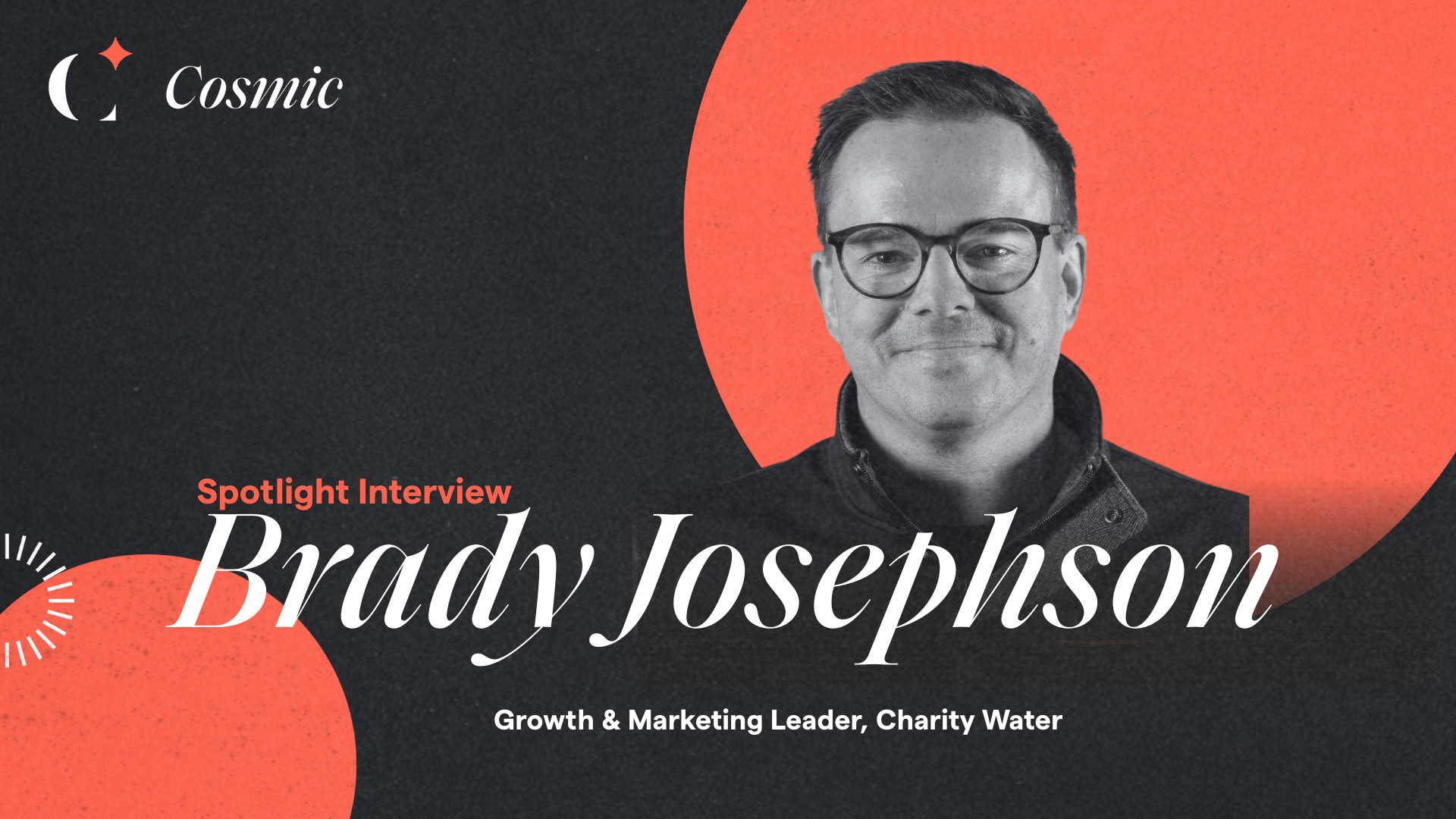
The nonprofit sector has a marketing philosophy problem. Somewhere along the way, we adopted a playbook built almost entirely around conversion, direct response, performance marketing. Get the click, get the gift, optimize the funnel, rinse and repeat. And look, that stuff matters, but it’s also incomplete because all of that activation depends on something most organizations never intentionally build: A brand that people actually know, remember, and feel something about.
You can’t convert someone who’s never heard of you. You can’t retain a donor who has no emotional connection to your work. And right now, the sector is raising roughly the same amount of money from fewer and fewer people every year. That’s what happens when everyone is fighting over the bottom of the funnel and no one is investing in the top. The missing piece isn’t a better campaign or a sharper donation page.
It’s brand. And not brand as in a new logo or colors.
Brand as in a deliberate long-term investment in making people feel something about your organization before you ever ask them for a dollar. That requires a willingness to make bets that are hard to measure and may take years to pay off. It requires playing the long game — and almost nobody in our sector is doing it. Except for charity:water. They’ve become one of the most recognized nonprofit brands in the world and it’s not by accident. Over the past few years, they’ve been quietly re-imagining how they invest in brand from TV campaigns designed to surprise rather than solicit to a 7,000 square foot immersive experience space in Tennessee. They’re making big bold bets and they’re working. To understand what that looks like from the inside, I wanted to talk with Brady Josephson. Brady is the head of growth and innovation at charity:water. Before that, he led their team through this multi-year shift from performance first marketing to serious brand investment.
He spent most of his career in the direct response and performance marketing trenches. So when he says the sector needs to rethink its relationship with brand, he’s not just a designer selling you in aesthetics. He’s a data guy who followed the data and he came to a completely different conclusion. I’m Eric Ressler and this is Designing Tomorrow, and now my conversation with Brady Josephson.
Episode Highlights:
[00:03:00] How charity:water unknowingly burned through its brand equity
[00:05:30] What “investing in brand” actually means beyond logos and colors
[00:07:00] Why brand marketing takes 3–6 months to show ROI — and why that scares people
[00:11:00] Self-determination theory and why trust is really about competence
[00:14:00] The charity:water origin story and building for skeptics
[00:18:00] Why brand strategy looks different for small local orgs vs. large international ones
[00:22:00] You can tell the same story far more times than you think
[00:25:00] Inside charity:water’s 7,000 sq ft immersive experience space
[00:30:00] TV, attention, and why you need 2.5 seconds to form a memory
[00:39:00] What it actually takes to get organizational buy-in for brand investment
[00:44:00] Pick one growth engine and stop trying to do everything
[00:48:00] Brand vs. individuals: why charity:water was slow to adapt — and what they’re doing now
Notable Quotes:
[00:04:00]: “There’s something that we can’t see further up, carving the pathway for us that has now gone dry.” Brady Josephson
[00:15:10]: “Every nonprofit consultant would be like, ‘Don’t worry about them. They don’t give. Focus on these people.’ But that’s the exact type of thinking that creates where we are in this space, where we are raising the same amount of money from fewer people every single year.” Brady Josephson
[00:09:30]: “They don’t have a very clearly defined impact story. Maybe there are fundamental issues with the brand. We need to all be better about understanding human psychology if we want to reach people in a more deep and emotionally driven way.” Eric Ressler
[00:44:15]: “What you say no to or what you do less of is the game. That is strategy.” Brady Josephson
[00:24:00]: “You acknowledge some of the footage is old, some of the facts are out of date, and yet you’re putting millions of dollars of ad spend behind that piece.” Eric Ressler
[00:39:50]: “I did the work, did the research, came to the conclusion, vetted it to the point I was like, ‘I’m fully committed to this. I’ll put my job on the line for this thing.’” Brady Josephson
Resources & Links:
charity:water — Brady Josephson’s organization, known for innovative brand-building in the nonprofit space
The Factory at Franklin — Chelsea Market-style venue in Franklin, Tennessee, home to charity:water’s 7,000 sq ft immersive experience
Lenny’s Newsletter / Lenny’s Podcast — Former Airbnb growth lead Lenny Rachitsky’s newsletter and podcast, home to the “race car” growth framework Brady references
SSIR article on fundraising diversification — Article on the trap of fundraising diversification
Bank of America Philanthropy Study — Referenced in context of giving trends showing fewer donors giving more
P.S. — Struggling to align your message with your mission? We help social impact leaders like you build trust-building brands through authentic storytelling, thoughtful design, and digital strategy that works. Let’s talk about your goals »
Eric Ressler [00:02:15]: Brady Josephson, thank you so much for joining me today.
Brady Josephson [00:02:15]: Thanks for having me, Eric.
Eric Ressler [00:02:20]: So I’m really excited today to dig into all things brand and brand marketing and social impact and the intersection of those things. We are right in my sweet spot and the sense that I get from you is we’re right in your sweet spot too. So I would love today to just break down, and if you wouldn’t mind, let’s imagine together a completely different social impact sector where brand marketing and brand building is core to how nonprofit organizations communicate and what that looks like. And I think I’d like to tee us up by giving you an opportunity to talk about what you’re in the middle of right now as a leader at charity:water and how you’re experimenting with really completely re-imagining how you guys are making investments in brand and in paid media and in communications in general, and let that tee us up for the rest of the conversation.
Brady Josephson [00:03:10]: Yeah, that’s a big conversation. I’ll do my best. I think one thing to acknowledge right off the hop is I come to the brand side of the brand marketing conversation pretty honestly and through the back door. So much of my career was on more of the bottom funnel, transactional, performance marketing, direct response. Like a lot of people in the nonprofit space. If you read articles and go to conferences, the vast majority of things that get taught and are learned, whether it’s at grad school or conferences or podcasts, it’s often pretty transactional, pretty bottom funnel. And so I think it’s a bit of a journey that a lot of direct response people go on for a bit is like, “Oh yeah, direct response is the best provable ROI.” And then at some point you’re like, “Oh gosh, this isn’t working like it used to. What’s the problem?” And then you figure out, ah, there’s something that we can’t see further up, carving the pathway for us that has now gone dry, which is exactly the story of charity:water.
Unbeknownst to charity:water, I think, was really investing in brand, in brand marketing for years and years and years. Very intentional about brand and design, but in terms of building a brand and brand marketing, I think it was a lot of just intuition from our founders and early folks. And so then when we shifted more to really growing the monthly giving program and focusing more on revenue optimization, we started pulling from all that brand equity that we had built up until one day it was like, we’ve pulled all the brand equity that we’ve earned up. And so how do we get this ship going in the right direction again? We need to actually invest more in the brand.
And so that’s really the journey that we’ve been on over the past two years or so is really plateauing in revenue, what’s going on, ending up and saying, “I think we have a brand problem, not so much in logo and positioning, but just reach, awareness, engagement, which is causing a lot of revenue problems for us.” And so that’s the journey that we’ve been on and the journey that I’m on more as a marketer as well.
Eric Ressler [00:05:10]: There’s so much to dig into right away. And I want to try to break down some of these terms to listeners, especially who aren’t as in the weeds on this stuff and make it more accessible. So bear with me while I do that a little bit.
Brady Josephson [00:05:25]: All right.
Eric Ressler [00:05:25]: When you talk about investing in brand, what does that actually mean? Because I think a lot of people hear that and they’re like, “Oh, so we’re going to redo our logo and our colors now.” So what do we mean when we talk about brand marketing and brand building? And I’m happy to riff on it from my perspective, but I’d love for you to start.
Brady Josephson [00:05:40]: Yeah. Again, it’s hard. And you could probably ask six different people and they would answer it slightly differently. When I say invest in brand, I’m very specifically talking about how we use paid dollars and resources to make the brand more known. And now you don’t want to do that unless you have a better sense of who we’re trying to reach, what the targeting looks like, what the positioning is, what the logo should look like. Those are underlying things that you would have in place before you really spend a lot of resources and time and money to make sure people know who you are. Otherwise, what’s the point? If you’re not creating the emotional connection that you want, there is not as big of a point for brand marketing.
So it’s both the lowest thing of how do we reach people with the brand, but it’s also the highest thing of how do we leverage the brand to create emotional connection with people and hopefully invite them in some way to join us on our mission and our journey.
Eric Ressler [00:06:30]: Great. So I agree with that. And I would say that one of the things that you alluded to in your first response is this tension between brand marketing and brand building, which I look at really as longer game plays. They may have some short term results, but really we’re looking at playing a long game. Whereas direct response, performance marketing, very targeted campaigns, conversion focused campaigns — we’re talking about measuring things in weeks, months, sometimes even days. Whereas brand marketing, and I think some of the data that you guys have collected even on your own shows that we’re talking more at least in three to six months before we can really start to see a return on investment.
And I’ll just put a pin in this because I want to come back to it in more detail. Measurement of brand investment is becoming harder and has always been harder to a degree. And I think that’s a big reason why people traditionally underinvest in brand marketing.
Brady Josephson [00:07:25]: Yeah, that’s definitely it. And I think a lot of it does start with the measurement side. And when you actually go into a lot of the research around how do you measure brand, it’s often quantified in things like business effects, share of market, are you actually growing or sales improving? They’re pretty top level. And that’s at one level so opaque, but it’s also like, what do we exist to do? We do not exist to increase retention by two percentage points or increase our donation page conversion by three percentage points. Those are little pieces of the whole. We exist to grow our causes to help more people, in our case, get the clean water that they deserve. That’s all that matters.
And so at one level, we get so wrapped around the axle and myopic around what was the ROI on that email and this campaign and just saying, are we moving the organization forward and achieving the things that we need to do or not? And that’s really what is the bellwether of the brand. If you have all the awareness in the world and you can’t execute your mission, who cares? So that’s fundamentally the thing that you start measuring against. And once you start really understanding brand measurement, it is really the most important thing that you can get into. Now you can get into more detailed specific parts of brand measurement that we can talk to, but at the highest level, it’s like, are we helping drive the business forward or not?
Eric Ressler [00:08:40]: Totally agree. And what I would also add to that from the way that we think about it is if you get so myopic in these conversion rate optimizations to the stat that you threw out, improving conversion rate in the donation form by 2%, that can make a big difference, especially if you have hundreds of thousands of monthly donors. But what I often see in my work, and we tend to work with growth stage nonprofit organizations, social impact organizations, is that we’ve been trained to focus on ROI, on return on investment, return on advertising spend, these things that we see as best practice.
But what I consistently see with the clients that come to us is that they are missing the bigger picture fundamentals of good brand marketing and hyper focusing on these things almost like they’re trying to run before they’re even walking in a lot of cases, where they don’t have a very clearly defined impact story. Maybe there are fundamental issues with the brand that might be the name, it might be the logo, it might be the design system, it might be their ability to just create any kind of emotional connection. I think there’s a lot of academic speak and jargon being used to describe the impact work coming from research and that stuff is important, of course, but we’re losing something.
We need to all be better about understanding human psychology if we want to reach people in a more deep and emotionally driven way and actually move our missions forward. And so I would rather take all of that time spent, or let’s say 75% of the time spent on these micro improvements, these conversion focused improvements, and put that towards understanding how people actually tick in this space, what actually gets people lit up.
And I want to touch a little bit on one of those things I think is becoming increasingly important, which is trust, which is a little bit of a buzzword right now. But if people don’t know your organization and people don’t trust your organization, if there’s not an emotional connection, if there’s not credibility built, none of those conversions are going to matter because you are reaching only a fraction of the people that you have the potential to reach. So I’m wondering if you might be able to riff on how you all think about building that trust, building relationships with the people that you need to reach and reaching new audiences at charity:water.
Brady Josephson [00:10:55]: Yeah, definitely. It’s critical for all transactions. And let’s try two different frameworks. One, so talking about understanding humans, I’m a pretty simple guy and one of the best frameworks for understanding humans, self-determination theory, which basically says at the root of all things that we do, we want to be competent, autonomous, and connected to others. And I think that’s a pretty good way to think about it. And so for me, trust is a subset of competence. When people give, they want to feel like, “I’m a smart person making a good decision.”
So I think too often when we hear trust, we immediately go to overhead spending or impact reports or something like that. And that’s a function of it. We have that. We have a hundred percent model, which is really built on the idea that so many people when it was invented did not trust charities. And so we just said, “We’re going to do it differently to take that out of the equation altogether and just say, do you want to give or not?”
So that is a component of it, but a bigger component is, are you helping people feel competent? And you can do that in different ways through really great storytelling where people have an understanding of the work that you do, through a really tangible offer of $40 does this. That’s a way for people to feel confident. There’s so many different ways to go at building trust, but I prefer to focus more on competence because I feel like it’s a little bit bigger and it’s a little bit more of the driver that I think humans are really looking for when they’re scratching at trust. It’s really, “I want to make sure I’m making a good decision and there’s other ways that we can do it.”
Eric Ressler [00:12:20]: Yeah, I actually really love that reframe. I’ve never really thought about it quite that way. The way that I’ve thought about it before is that people want to support organizations that they feel like are going to make an impact, which sounds very obvious, right? But when you start to really break that down, what is it that makes people feel that? And it is a mix of things, I think, in my opinion. Yes, impact storytelling and stats and numbers and seals and transparency and those things are all adding to it.
But I think more than anything, it’s actions in the real world. And this is why I believe communications, and we can even stretch this more to brand building, is so important, because you have to show people that when they are investing in your organization, it is actually leading to actions in the real world, not just an annual impact report. And I believe this is something that charity:water has been exceptional at compared to the standard.
And we can talk about the 100% model. We could talk about the transparency and the tracking opportunities that you provide donors and supporters, but I think you guys have done an exceptional job at making someone who’s considering becoming a supporter feel like it’s going to be a good choice, that it’s going to actually make a difference, going to lead to real world impact, that it’s not just this, “I’m supporting because it feels good.” And there’s nothing wrong with supporting because it feels good. And a lot of people do give from that emotional standpoint. But I think the more that you can make, to use your framework, supporters feel like it’s a good logical decision — people do give from emotion, but there is a logical barrier that has to be overcome for that giving to actually take place and people actually put their credit card in.
Brady Josephson [00:14:00]: Yeah, for sure. And a lot of the charity:water story for people who aren’t familiar — it was a club promoter in New York who was like, “What is my life about?” He’s 31 saying, “This got to be more to life.” Quit cold turkey, went on a service trip on a mercy ship, started taking photographs and walked out into rural Liberia and came in contact with just horrible water and said, “You know why everyone’s getting sick? It’s because they’re drinking this water.”
Came back and turned his life around and said, “I’m going to give my life to this cause.” And so much of the DNA of charity:water is built for skeptics, to be honest, right? He went back and threw a birthday party with all his not typically philanthropic friends and said, “I’ll prove this to you.” And that’s what we have today. We track a metric of how many people give to charity:water and it’s their first time ever giving to a nonprofit because we feel like that’s part of our role in the charitable ecosystem is to help try and grow the charitable pie, not just take a bigger slice of it.
And two, that’s what we try to hold ourselves to. The vision originally was to reinvent charity. You can’t say you’re reinventing charity by just raising more money from the same people. So that’s always been in the DNA. And that’s where a lot of the model, the proof, the trust is saying, we are trying to convert the skeptics. And that is on paper, low ROI proposition. Every nonprofit consultant would be like, “Oh, don’t worry about them. They don’t give. Focus on these people.” But that’s the exact type of thinking that creates where we are in this space, where we are raising the same amount of money from fewer people every single year because we all follow that methodology. And it’s not one focused on growth.
And so I feel really lucky to work at an organization that has so much of that in their DNA because that mindset and view is often by far the hardest thing to get in organizations. And I realize that.
Eric Ressler [00:15:40]: Yeah. And I think that’s consistent with some of the recent giving trend data. We just did an episode with the Bank of America philanthropy study. And one of the things that came out from that is that overall, fewer people are giving. However, the people who are giving are giving more. And that’s positive in some ways. And a lot of the takeaways from that episode is there’s some good things to be feeling good about in terms of overall giving is up. Some of the data that just came out around Giving Tuesday was pretty positive as well.
But the near enemy of that that I’m a little bit worried about is that fewer people are giving. And not only are fewer people giving, but this is just, in my opinion, a reflection of growing income inequality, especially in America. And we want charity to be a big tent game, in my opinion. I don’t think it should be something that is reliant on a smaller and smaller subset of wealthier and wealthier people to prop up. And there’s been all kinds of discussions around some of those elements of philanthropy.
So how can we make philanthropy every person’s game? Where it’s not this exclusive club where you’re a philanthropist and you come to expensive galas, but something that everyone can participate in in a more democratic way. And I think that charity:water has been a good example of what that style of philanthropy looks like.
And what I’d like to go next actually is to talk about how that might translate to orgs where the story isn’t quite as simple or intuitive as charity:water. I think when you’re first introduced to charity:water, it makes intrinsic sense. Oh, people need clean drinking water. I give money to charity:water. They give clean drinking water to people who need it. At face value, a very simple story. The ROI for a potential retail donor is really straightforward. What about orgs who are doing more upstream work, where they’re doing systems change, where they’re doing advocacy work, where they’re doing policy work, where they’re not doing as much boots on the ground work? Do you feel like some of the approaches that you’re taking specifically around brand building and building out more awareness and top of funnel is still worth exploring? Or what would you do if you were to join an organization like that and be in charge of growth?
Brady Josephson [00:17:55]: Yeah, I think that’s a great point. Oftentimes we get in conversations and we talk about the nonprofit space, or especially when maybe you go to conferences and are talking about the nonprofit space with folks who maybe don’t spend as much time in it. It’s a huge space, right? It’s like 13% of the workforce. It’s bigger than the manufacturing industry. It’s huge, and yet we often talk about it as it’s singular. And so I think it is worth pointing out. There’s some splits that we can talk about, like large and small, international and local. So even just think about a two by two grid. We’re large international. That’s very different than small local.
So some core concepts, marketing is marketing, fundraising is fundraising, great. But some of the things carry less value. And I would say if you are local and small, yeah, building up top of funnel and brand is probably not as impactful, but it doesn’t mean you don’t need people to know who you are or resonate with what you do or have an offer. You absolutely do. It probably just means that strategy will diminish quicker than say a large international organization.
And so again, if you come back to people need to know and trust and feel competent, that’s really what the brand exists to do. You can’t feel competent about something you’ve never heard of before. Or if the story is so confusing, you can’t quickly understand what it is. So we are very fortunate. Clean water, we’re not faith-based, we’re not political, we are very accessible and that has been part of the recipe for success. So I fully acknowledge that.
I do think we overcomplicate things in the nonprofit space as well, right? You get a lot of programs people, a lot of academics, a lot of people who get into it because they want to serve the people, but how they think about the work is often very different than the average person who will fund the work. And that is one of the marketer’s and fundraiser’s biggest blind spot — you know too much and you lack the ability to talk about it in ways that work if you don’t have that information.
And so that’s where agencies and outsiders can be super helpful. Actually, if you trust them, that’s where research can be super helpful and testing can be incredibly helpful because almost for sure how you think and talk about your organization is wrong, just left to your own devices. Maybe major donors, maybe major funders, but if we’re talking about mass consumer, which is where I live, your natural instincts are probably wrong. It’s just the way it is, honestly.
Eric Ressler [00:20:20]: That rings really true. And I think one of the things we’re often working with clients on is there’s this intuition, especially if you’re more academic in your background and more research oriented, really true category experts in the space, which a lot of nonprofit organizations and leaders are — we’re talking about some of the most complex issues in the world. They should be the world’s leading experts at this work, but they have a sense that they must tell the entire story all at once.
That’s the big mistake that I see more than often. It’s like, oh, but we’re not talking about this program or this program or this program, or that’s not quite true where you’re forgetting this one nuanced thing. And it’s like, great. So when you go to a movie, do they just regurgitate the entire plot all at once or is there an actual narrative? Is there tension built? Is there an introduction? Is there an establishing shot?
So I think a lot of what I see our job as we are working with social impact organizations who are doing oftentimes super complex, super deep work, how do we translate that in a way that is accessible without at the same time inadvertently dumbing it down? And there’s no silver bullet answer to that. That is the hard creative work and that is the strategy work that needs to be done.
But one of the things, and for listeners who are trying to figure that out right now and also figure out how does that fit into this idea of brand marketing, I would encourage you to realize that you don’t need to tell the whole story all at once, that you can drip that out. What is the simplest, most memorable, most intuitive way to introduce someone to your story and then build more depth and breadth over time in relationship. We talk a lot about donor nurturement and nurturing donors, engaging donors. One way to do that is to tell a deeper and deeper story over time instead of trying to do it all at once.
Brady Josephson [00:22:15]: Yeah, for sure. Again, and this is where data can help too. If you think about web, probably 85% of people who visit our website have never visited before. And so even if you’re telling a story, keep it simple, but also you can tell the same story pretty much way more than you think, just like you can reuse content.
So when we launched our monthly giving program called The Spring, there was a video called The Spring Film, and it’s an 18, 19 and a half minute mini documentary. And we’ve been running it and sharing it and putting millions of dollars of paid spend behind it for seven years. And people see it for the first time and they’re amazed. It’s a little old, some of the footage, some of the facts are out of date, but what we’re trying to accomplish, it absolutely achieves. And there’s so many people who still haven’t seen it, even though over a hundred million people have. And even if they have, they’re like, “Oh my gosh, I forgot I watched that a few years. This is amazing.”
And so again, I think the parallels to me are just like, we are so in our own shoes without using some data or research or trying to get outside and say, “Yeah, but they don’t know who we are.” Or even if they do, you’re probably not as big of a role in their lives as you think they are as well. So some repetition or some revisiting is totally fine. And I just think we get so wrapped up in our own stuff, it gets harder to do that. And in some ways it’s actually harder when you’re smaller because you know everyone or you feel like you know everyone. When you’re big and you just have a lot of numbers, “I can’t possibly know everyone,” it does get a little easier in some ways. But that mindset I think is really helpful. And that’s where I think coming from more of the data side actually helps in some ways on the brand side — you just think about data and it really helps unlock some of that.
Eric Ressler [00:23:55]: Yeah. I want to reiterate one thing you said that I think is actually quite fascinating, which is you acknowledge some of the footage is old, some of the facts are out of date, and yet you’re putting millions of dollars of ad spend behind that piece. I’ve worked with so many organizations where those two things would be an absolute deal breaker. And this is, I think, where we sometimes lose sight of the bigger picture — we can’t get so caught up in these minute details and lose sight of the fact that you guys put a lot of time, energy and effort in producing that piece.
I remember when it came out, it stuck with me because it felt different, and you’re willing to continue to promote it and to distribute it, which is another thing that I think a lot of folks heavily under index on. They spend all this time and energy putting creative things together, but have no distribution strategy whatsoever or no paid media spend behind it.
So I think that’s a good segue actually. I’d love if you wouldn’t mind sharing some specific stories and examples about what you all are doing right now and taking some bigger swings around investing in brand. And I’d love if you wouldn’t mind starting with the 7,000 square foot retail space that you guys have opened and what was the idea behind that? How’d that come to be and what are some of the early results from that so far?
Brady Josephson [00:25:10]: Yeah, that’s definitely the biggest swing we’ve taken since I’ve been here. It’s a pretty big one. So what it is, it’s 7,000 square feet. It’s in Franklin, Tennessee. It’s in a cool Chelsea Market style place called The Factory. And we’re up on the second floor and we have hour long reservation only free tours where people are introduced to charity:water and the water crisis and watch a video.
They go for a walk for water in a really hot room lined with LEDs and you’re on a treadmill and you carry a jug of water while you walk behind a girl in Uganda to try and get a sense of what it would be like in Uganda. You learn more about diseases, bacteria and water, you learn about the solutions that we have. We have a VR film that we shot where you see a community get clean water for the first time through the eyes of a girl in that community, which is the pinnacle absolute experience. Everyone rates it the number one. And part of it’s the journey that we create, but part of it too is just, again, keep it simple. If you watch a community go from not having water to having water, you’re forever changed by seeing that. So that’s all we’re trying to do is just let you see it.
And then there’s a real pump that we built that you can pump in celebration. So it’s really tactile, really experiential, really family friendly. Costs a lot of money and took two years to build and get off the ground. And we’re about nine months post-launch, one year after soft launch.
The idea came about because we would have so much success and invest so much in our galas in the past. And so you’d put all this energy into these amazing experiences at an event and then you’d have 200, maybe a thousand people see this, they’re transformed, and then onto the next thing. No one else gets to experience it or see it. And so the idea, and this wasn’t my idea, it was long before — it’s when we were still based in New York — was saying, “What if we just took the best that we’ve produced and made it accessible for more people to come and experience it because this stuff is amazing. And we’ve already spent so much time, energy and money to develop it.”
And so we started looking at shops or pop-up shops, and this was New York in 2019, 2020, and then it was not a good time to invest in retail. And so when we got on the other side, we went remote only. Our founder found his way down to Nashville and Franklin, Tennessee, and we hit this plateau. Then it was like, well, what if we revived this idea but gave it a different spin. So instead of in New York or at a pop-up, what if we put it in this up and coming place where we could get a really great deal and it’s close to the founder and it could be this storytelling asset as well as something that the public can really use.
And so it was really risky at one level, but also we had a decade of knowing that when we put our story and experience in front of people, it works. So the risk was more in, can we get enough people through this space and will it generate enough revenue? It wasn’t, would we provide something that’s compelling? And again, I think that’s a luxury that we have at charity:water where that’s not really what we question. We know that we have that in us. It’s more like, can we make this work from a business standpoint?
And so yeah, we’re about nine months in. We’ve had over 7,000 people visit. We’ve raised about two and a half million dollars in projected revenue. The net promoter score’s about 93%. People are coming back and bringing their families. It’s truly amazing. You got to come check it out. It’s quite special.
Eric Ressler [00:29:20]: I’d love if you could share some of the other ways that you guys have been reallocating your spend from bottom of funnel to top of funnel and some of the early results that you’ve seen from that too.
Brady Josephson [00:29:30]: Yeah. So I think one of the things is we started investing a lot in TV. And so again, when we went on this deep dive of how do we invest in brand in a meaningful way and what’s out there from a research perspective, you quickly end up in a place where you’re saying we need to capture attention. You need about two and a half seconds of attention to form a memory and memory is linked to building brand or recall or something called mental availability, which is the academic term of when someone goes to think of you, will they? Essentially.
So you need attention and some channels are way better at delivering attention than others. So you can run display ads for days, but capturing someone’s attention is really difficult. They’re just going to glaze right over it. Where TV, whether you like it or not, especially non-skippable ads, they capture a lot more attention than almost any other medium. And so TV doesn’t make sense for some things, but when you’re trying to build brand or mental availability, you need that dedicated time.
So TV was one, but then you also need a different style of creative. We can’t just take a 19 and a half minute documentary or take some of the things that work really well in a fundraising campaign because those are made to activate people, not necessarily leave a memory. And some of the emotions that are linked to memory are things like surprise and happiness. And surprise is one that nonprofits typically don’t do very well at all. I think we’re getting better and better at happiness, but it’s pretty expected happiness. This person didn’t have something, thanks to you or thanks to this organization or a local partner, now they do and everything’s happy. It’s also pretty expected. So even the happiness that we provide, I think, is a little muted because we all tread a very similar storyline.
And so we shot some very different creative that would be more like brand spots that you would see. A car going through a car wash without water, a kid going on a slip and slide without water, someone at a diner who gets coffee without water. And we don’t actually talk a lot about the work we do in the water sanitation and hygiene space or our local partners or none of that’s there. It’s really solely built on how do we capture attention, leave an emotional connection tied to our brand, which is really what nerdy brand building on TV is really about. So we really tried to execute that strategy.
Eric Ressler [00:31:45]: And I think this is what you see consumer brands do all the time. And sometimes I talk to friends and the classic example of this is the Super Bowl ads. And everyone’s talking about what their favorite Super Bowl ad is, but there’s always someone in the room who’s like, “These ads are all stupid. None of them describe what the products are.” And there’s a very good reason for that, which is that they don’t exist to describe what the products are, what the benefits of the products are. They exist to create that recall and that memory. And surprise and curiosity also are two of the most important emotions to trigger to create memories and to create that recall.
And it is interesting to think about how might social impact organizations do that. The way that you approach some of those spots, and I’ve seen some of them, are very nontraditional for the space. I can’t really think of too many others quite like that. I would say probably the closest thing would be celebrity voiceover style ads that you’ve seen from some major international orgs that have been done by some of the major ad groups down in LA who have a for good arm or something.
And so I’d be curious to hear how that’s gone for you so far and how you think about how that fits into the overall flow of engaging someone and inviting someone into the charity:water world.
Brady Josephson [00:33:05]: Yeah. So I think one thing worth pointing out too is TV today is very different than TV five years ago and definitely TV 15 years ago. So to help measure this, we implemented something called marketing mix modeling and it tries to take a holistic view of what’s driving performance. So it’s not your CRM doing attribution, it’s not your platforms doing attribution. It is a data model looking at three plus years of all the data and trying to — then we trained it for six months to try to figure out what’s actually driving that.
So you think something shows up as a search donation, search doesn’t drive very much. Something drove the person to look for you. It could be seeing an ad, hearing someone speak, something’s driving it. And so what MMM is trying to do is figure out, yeah, but what’s the thing that drove the thing that got the thing?
And so we implemented that largely to help monitor TV. And what we found through that is TV was our second cheapest donor driving platform according to MMM. So they may have given through search, but TV is really what drove them. And that’s a bit of a game changer. And if you think about how you watch TV, you can watch TV, be like, “Huh, that’s cool.” Pull up your phone, Google really quick, scan the QR code. You can go to the website. And if the website’s good and simple and clear, you can go from never hearing about a brand, being like, “That’s pretty cool,” to buying something or taking an action faster and easier than ever before.
And so that’s the other one of the main arguments for investing in brand now is you can transact almost anywhere, but can you be remembered and will people hear about you? The value of brand is going up in the world. That’s the bet that we’re making. But I want to make that point on TV because often it’s like, “Ah, TV, it’ll take forever.” And maybe, but it’s more of a performance channel today than you might think, I think, especially if you do creative really well.
Eric Ressler [00:35:00]: No, that’s great. I want to actually go a little bit deeper on that because what I don’t want listeners to do is say, “Oh, Brady says TV is the future. We’re going to go spend a bunch of money on TV.” Because I think what you have to realize is, especially if you’re doing connected TV or YouTube is often synonymous with TV these days, you cannot just run your boring academic documentary on TV and say you’re doing brand marketing. I mean, I guess you could, but that would be a really bad idea.
And so I think especially if you’re talking about YouTube, but even to a degree just TV as a channel, people are typically watching TV to be entertained, right? Sometimes people are there to learn. I do actually a lot of learning on YouTube for my own personal reasons for music stuff. But it’s an entertainment modality. And so if your content isn’t entertaining, even if it’s edutainment, it’s a mix of education and entertainment, it’s probably not going to perform very well. So I’m curious how you guys thought about the creative element of that and making sure that the content was actually appropriate for the medium.
Brady Josephson [00:36:00]: Yeah. Again, I think that’s where a lot of the research is coming in handy is trying to figure out what are the emotions and then how do we evoke some of those emotions like surprise. And then we did some pretesting. So we did various degrees of pretesting to see, “Hey, is this resonating with people?” And you can do it as cheap as $800. There’s a tool called Listener that we use a lot. We just used it this week and you can recruit a panel pretty cheaply and get some feedback. And again, trying to get out of your own mind. I mean, that’s why we did it — our creative director was working on something and I said, “I like this, but I’m pretty biased because I really like those people. Let me try to get out and get some other data.” And sure enough, the folks that we paneled really preferred the other one. So I said, “All right, let’s try the other one.” So that helped guide us.
And then we had some more sophisticated testing in there as well to make sure that we were on the right track. And so it’s not just like, you don’t flip a switch and then just start pouring money into TV. You can test in little ways. Again, you can stand up TV or if you have YouTube, you can say, “Just show this on TV with some creative that you feel might work and just start getting your feet wet.” There’s some ways to do it.
And then we also — I spent maybe a year getting the alignment that this is a good thing for us to spend on. So even though charity:water has high risk tolerance and we get brand, it wasn’t just like, “Hey, I want to take half the budget and just spend it on things that are going to be super hard to measure.” It took a lot of time and that’s where a lot of the research came in. And then our founder intuitively getting it helped a ton, but it was a year and a half process to get us to the point where we were willing to start making those types of investments. And then we made smaller investments and then made bigger investments. So all in, it’s been a three-year process to get to this point where we feel like we’re aligned, we’ve got the creative, we’re investing at a high level and we’re confident in it. It didn’t just happen in a three-month window. It’s definitely a big commitment that we made.
Eric Ressler [00:38:05]: I think that’s actually a bigger theme I’d like to dig into just a little bit because I often do hear and see people online in the social impact space hold charity:water up as this benchmark, this aspiration around, “Well, this is how charity:water did it. We should do that too.” But what I don’t think a lot of people understand is how much time, energy, investment and expertise you all put behind the work. I think a lot of that is invisible and people want the results, but don’t understand what that actually looks like to get those results.
So I’m wondering if you might be able to, at least at a high level, just give people a sense of what does it take to run your communication and fundraising program at large at charity:water? What’s the general team size, level of investment at a high level even? How much iteration and growth and professional development are you doing? I want people to understand that this doesn’t happen magically. And I’d actually like, even if you wouldn’t mind talking about the ability for risk tolerance, because I feel like that is a non-negotiable for running a program like this.
Brady Josephson [00:39:10]: Yeah. I think that’s probably the best place to start, honestly. And I was having this conversation with someone and we were just saying, how do we create ways to shift the mindset of executive leaders and board members? Because absent that, it’s really hard to change. Someone could be listening being like, “I get it. They’re sold on brand, they’re sold on TV, but they have to get that person or those people or all the way up the chain because you can’t just make this type of investment over time without that type of alignment and buy-in.”
So one, I do think even at charity:water, you have to work hard for it. So you have to be really convicted and willing to put yourself out there. And it wasn’t just me, but it was definitely something that I did — I did the work, did the research, came to the conclusion, vetted it to the point I was like, “I’m fully committed to this. I’ll put my job on the line for this thing.” And so few times do I think people are actually willing to do that. And then it’s like, “Wow, nothing happened.” And it’s like, “Well, how willing were you to put yourself out there and do the work?”
So I think that’s important, but I do think risk tolerance at charity:water’s super high. We’ve had something in our culture from day one about trying things, testing things, wanting to be the first. There’s a concept called safe to try where there was a process where you’d get a gathering of cross-functional people and run this idea by them and you’d get a cumulative, yeah, that feels safe to try, to de-risk some things, but everyone’s starting point was yes.
So there’s these things baked into the culture to make it happen. And then our investment last year on the paid side was about $2.6 million, which is pretty big for international, but pretty small compared to some others, and especially TV. That was one of the learns actually — we can’t compete on TV with the other people that were competing on TV, so we need to still be smarter on the TV side.
Our marketing team’s way smaller than people think. When I started, we were rebuilding the marketing team. There was zero full-time marketing people when I started. Now we had a big creative team and they did a lot of the marketing work. So again, when you get into marketing, it’s like, oh, copywriter, are they creative? Are they marketing? Some fine lines, but our marketing team’s about five. Our creative team’s going through a transition. We’ve been as big as 12 and as small as two.
So it’s still a pretty lean team, but so much of our time and energy in the past has been really focused on marketing. And I think we have a marketing led founder or a marketing centric founder. When you think of Airbnb, they’re design led because their founder’s a designer. You think of Shopify, they’re engineering led, their founder’s an engineer. Our founders are creative and a marketer. So when he gets free time, he’s thinking about creative and marketing. And so I think that’s also really different as opposed to the programs person, the practitioner, the academic. Ours is a salesman, a marketer and a creative. So that makes its way through the org.
And again, it’s a really lucky spot to be in. But we’ve got a lot of constraints. We wish we had more time and money. We fail a lot too. Some people are surprised. Our email program is very small compared to what people think it is because we don’t focus a ton on it. We focus on some different levers. So yeah, you’d be surprised on some of the things that we have or don’t have maybe at charity:water too.
Eric Ressler [00:42:40]: Yeah. Thanks for sharing all that in a transparent way. And I think it’s all relative because sometimes we work with folks where they fought tooth and nail to get one full-time chief communications officer who’s supposed to do the job of 12 people somehow and also has no marketing budget to invest. So there’s folks at that level. And then of course, there’s obviously a whole spectrum of maturity from there.
I would like to just get your thoughts really quick around if you were starting from a smaller point of view, and let’s say you’re a $5 million a year org and you aren’t as staffed up. What are the bigger picture ways that you would think about making investments in brand, in fundraising, in some of the just general best practices for communications when you’re not quite at a level of sophistication that you’re even at at charity:water at this point? What do you feel like in your bones right now are the fundamental skills and where those are going and how those are changing right now? Because I do feel like this is all very fluid in this moment in culture.
Brady Josephson [00:43:50]: Yeah. No, that’s a great question. And I should mention too, my first job out of grad school, I was the only full-time employee. I know what it’s like to work in a small shop and wear all the hats. Before I answer the skill question, I think there’s a question on model. And I think this is where small and medium-sized nonprofits get really tripped up — they feel like we have to do all the things and you really don’t. You maybe have to do all the things at a small level, but you should not be doing all the things at the same level. What you say no to or what you do less of is the game. That is strategy. Saying, “Oh, we should do this, fine.” What we won’t do or what we’ll stop doing or what we’ll do less of is actually what real strategy is about.
And so there’s a great framework. There’s a podcast and a site called Lenny’s Newsletter, and he’s a former Airbnb growth guy, and he’s got a growth framework called a race car. And it really resonated with me because it basically boils down to — and this is a for-profit example — but there’s only four ways that you grow, that is your growth engine. And when you’re starting up or you’re small or medium, you only have one engine. You don’t have multiple engines. When you get to be really big, maybe you can develop a second engine. So you need to figure out what is the engine that is going to drive your growth, and then you orient everything around that.
That doesn’t happen in nonprofits. It feels like we got major gifts and grants and foundations and email and direct mail and monthly, and you cannot do all of it, especially if you’re really resource constrained. So some of that hard work is trying to figure out, like saying, we are going to be paid ads heavy and we’re going to focus on monthly giving. That’s how we are. That’s a tough road to go. It’s not the easiest one for all startups, but then you start going, “Here’s what we need then. We need money, we need content, we need data, we need digital.” So then who you need or who you hire is way easier to figure out, or what you need from the board.
If you can’t make that decision of what your revenue engine is or should be, then all these decisions get really hard. And so I think that’s the hard work that not just smaller, every org really has to do. And then you basically, again, have to double down and triple down on that growth engine and get better and better at it. And even diversify — I think we’ve overdone it on diversification. If you’re really good at one thing, keep doing it and finding other ways to improve within it. I think we’re often a little too quick to do big diversification like, “Oh, major donors are starting to dip. Let’s go to Corp.” Nope. That’s a totally different world. Get better at major donors, revamp major donors.
So I think that’s my own personal belief and I’ve really just resonated with that idea of growth engine and then what are all the things. And so then that leads to answering the skills question. So I don’t think you can really answer who do you need and what are the skills without knowing, well, what’s the strategy? What’s the engine?
Eric Ressler [00:46:40]: Yeah. Well, and there’s actually, and maybe you’re familiar with this — I’ll link to it in the show notes as we put the episode out. But there was a seminal article on SSIR about this exact issue, which is that there’s this trap of diversification around fundraising. And the data shows that when orgs really double down on one modality of fundraising and get really especially good at that, that’s when they tend to grow most.
And I don’t know that means that every social impact org out there should just find only one modality of fundraising and shed everything else that they’re doing. But I do think it means there should be one that you spend 75 plus percent of your time. Yeah, dominant. Totally. And optimizing around that. So I’ll check out Lenny’s podcast around the growth engine. That’s really interesting.
Brady Josephson [00:47:20]: Yeah, no, it’s great. And I think the other thing is there’s all these halo or additional benefits of a strategy that you pick up along the way. And so that’s one of the arguments for brand is by focusing on brand reach, you often reach your own donors and it actually helps increase loyalty and retention, even though that’s not exactly why you’re doing it.
And so that’s the other thing. If you have this dominant thing that you keep investing in, there’s network effects, there’s economies of scale, there’s unseen connections. And so you can get some of that as a byproduct, whereas trying to intentionally go after it sometimes is not even the right play too, right? So yeah, that idea of a dominant way to grow or focus, I think is really important.
Eric Ressler [00:48:00]: I have one more thread I’d love to tug on with you before we wrap up here around how you’re thinking about brand versus individuals and influencers and institutions versus people, because I feel like that’s a really big part of the conversation right now. We had Amanda Litman on the show earlier who comes more from the political world and she has some interesting perspectives around that brands can’t actually have ideas, that it’s really people that have ideas.
And you see this with content becoming less polished and more authentic, to use a buzzword. You see this with the trends in technology and more influencer based content and phone-based content being created. And I don’t think, by the way, that investing in brand and doing more authentic content is necessarily an either or. I think you can do both. But how are you all thinking about that in terms of showcasing the people behind the org and considering that trust in brands and institutions is down, although trust in nonprofit organizations is down less than any other major institution, which is good news for us.
Is that part of your thinking and conversation right now internally at all?
Brady Josephson [00:49:10]: Yeah, it is. And I think we were too slow to adapt, especially on the social side. And I think that’s where not being maybe as focused on data or what customers or consumers are saying directly or indirectly through data, we were pretty slow to react. The brand is beautiful. It’s really well designed and it’s world-class. I think it’s amazing, but it’s very clear that that stopped working the same way and we were pretty slow to figure out how to make that work for us.
Being here in the United States and working in the global south, there’s a lot of issues that we want to make sure we represent the people and communities we serve in an authentic way that makes it harder to just have someone in Franklin, Tennessee up in front of a camera and talk about the plight of a woman in Uganda walking for water. There are some real reasons why we were slow to get into it as well, but there were some things that we probably could have done in terms of our storytelling here, our supporters, where we could have done more face to camera.
So that is part of what we’re doing as we revamped the strategy. Having a physical place in Franklin helps a lot in terms of storytelling and some of those things. We started developing a local network of storytellers in some of the countries and communities where we worked. So we had about five or six folks that we had on contract that were excellent creatives, but from the communities that we served and grew up there and knew the people and spoke the language. And so when we would go on a trip, we would train and then we would keep ties with them. So if we needed a piece of content or wanted that first person story, the idea was that we could go and tap them so that it could be authentic, could be first person and not from us here in Tennessee or New York. It’s difficult to scale. It’s pretty tricky to maintain, but philosophically it was really cool.
So we are thinking more about that. And then the brand risk too, I think we’ve just acknowledged, look, this is part of it. If you really want to reach people, you got to lower the access and be okay with a little bit more risk in your brand — people talking about it. They won’t say it all correctly. You might get some blowback.
So we’re a little behind in that area, I’d say. And then the one thing too is everything goes in cycles. So that’s the other thing to be worried about is right now, great. That’s what the algorithms are saying. That’s what the brands are doing. That’s what everyone’s doing. Five years from now, it’s probably going to be something else. And so I think that’s the other thing. If you’re really rooted in what a great brand is about and what is great, whether they come to our site or they do it through chat, whether they hear it from an influencer or they hear it from our founder, the core that is the brand is still what you really need to make sure you maintain as those things come and go. So that’s where I feel like, yeah, we are a little slow, but at our core, I still think we’re in such a great spot to either catch up or catch up with what’s next.
Eric Ressler [00:52:00]: Yeah. I think that’s a great takeaway that I want to make sure listeners don’t misinterpret my question that, “Oh, now brand’s not important. Don’t worry about building.” I think it’s more about how does a brand show up in a modern way right now. And I think there’s a bit of an art and science to it because we see sometimes people are just hopping on whatever the latest bandwagon is. Oh, everyone’s on TikTok now. We have to do short form video and that’s our thing.
And to your point, these things all do happen in cycles. So if all you’re doing is building on those tangential discovery platforms, but there’s no foundational brand that supports it, you may be successful in that one channel, but then you’re constantly chasing the trends and there’s no bigger brand foundation that’s being built on top of that. Whereas if you do have that stronger brand foundation, you can surf those waves as they come, but always come back to something that’s building longevity and more robust support over time.
Brady Josephson [00:53:00]: There, as you think about it, I think I’m a growth guy and one of the differences I think between growth and marketing is you come with a hypothesis. And I think that’s helpful for things like that — okay, so TikTok, what’s the hypothesis? If the hypothesis is other people are doing it and it works, that’s not a hypothesis. Because you observe what means that you’re going to do what and you’re going to evaluate success because of what. And then any good experiment then goes, “Okay, if this works, now what do we do?”
And for most brands, I think they don’t have a hypothesis. And then even if you succeed, it’s like, well, now what? Now you got to feed the TikTok beast. Are you ready to do it? Can you do it? No. So why are we doing it? And I think that’s one of the reasons why I really like hypothesis-based thinking — it forces you to have some of that rationale or ask that question, “If this works, what do we do next?” And we had that. We had this great idea and we said, “If this works, we can’t even do the next phase. So let’s not even test it. It’s not worth it.”
So I think that’s one way to guard yourself a little bit against always chasing the shiny objects — having a hypothesis. Sorry, I just wanted to get that in there.
Eric Ressler [00:54:05]: No, thank you. I think that’s really helpful and touches back to your earlier point around so much of strategy is what you say no to, not what you say yes to. And it’s easier said than done, but I think that idea of thinking ahead a few steps — what happens if this does work? What happens if it doesn’t work? And I think the art of marketing and brand building and growth is knowing how long to run these experiments for before shutting them down.
Because sometimes if you shut them down prematurely, especially when it comes to attribution being hard and some of the brand building efforts taking six months, even a year at times to really start to pay off, you’re shutting these things down before they have time. I think about our show this way. If I started to measure the effectiveness of our show Designing Tomorrow after month three, I would’ve shut it down, but I knew that it takes a hundred plus episodes to really start to make a difference. And now we’re starting to see that payoff as we’re in episode 72 right now. And that’s because I come from that more long game brand building philosophy as a designer in my background and just as I’ve observed it.
Brady, one last thing before we wrap up for today. Thank you so much for your time. This has been awesome. I feel like we could do four more episodes on any of these topics, but I’d love to just hear what is lighting you up right now and what are you most excited about? You’re on this mission — my interpretation around where you’re at right now — of really doubling down on brand at charity:water, which seems close to your ethos as a growth marketer. But I’d love to just hear, what are you thinking about next and personally, professionally, what’s getting you excited these days as you’re waking up and doing this work every day?
Brady Josephson [00:55:50]: That’s a good question. Well, I’m about to go on parental leave, so I’m trying not to get too excited for anything other than hanging out with my baby boy. I think one of the things that we’re spending a lot of time thinking about and that I’m, I’d say maybe not so excited, but very curious about is AI search and web — or bigger picture, just off platform giving. Already so many people give off platform, donor advised funds, whatever, and we’re losing data and information through Privacy Acts and that’s only going one direction.
And so trying to think a few years from now, how do people even interact with charitable causes? Do they even come to our website? Are they even transacting through our forms? It’s definitely less. We always overpredict the future. And so then what does it mean to show up in the world when that is happening? It’s a pretty big question that we’re all facing. And I think that’s really interesting and curious — I’ll hopefully be able to spend some time on that.
And then maybe at the other end of the scale, I’m really excited to get more into our monthly giving program again. I feel like we took a couple years, not off, but to really focus on major gifts and brand. And now I think hopefully in this next phase, it’ll be back to, yeah, but why do we really want to build brand and build up this future demand? It’s to really grow our movement, capture that demand. And that’s really about subscription giving in The Spring. And I just love that program. I think it’s so important for us. I think it’s so relatable and accessible for small donors, young donors, old donors. And so to put some more life and energy into that program, I think is going to be really exciting.
Eric Ressler [00:57:30]: Awesome. Brady, this has been great. Thank you so much for your time today. Really enjoyed everything we talked about and looking forward to what you all do next.
Brady Josephson [00:57:40]: Thank you so much for letting me share.