


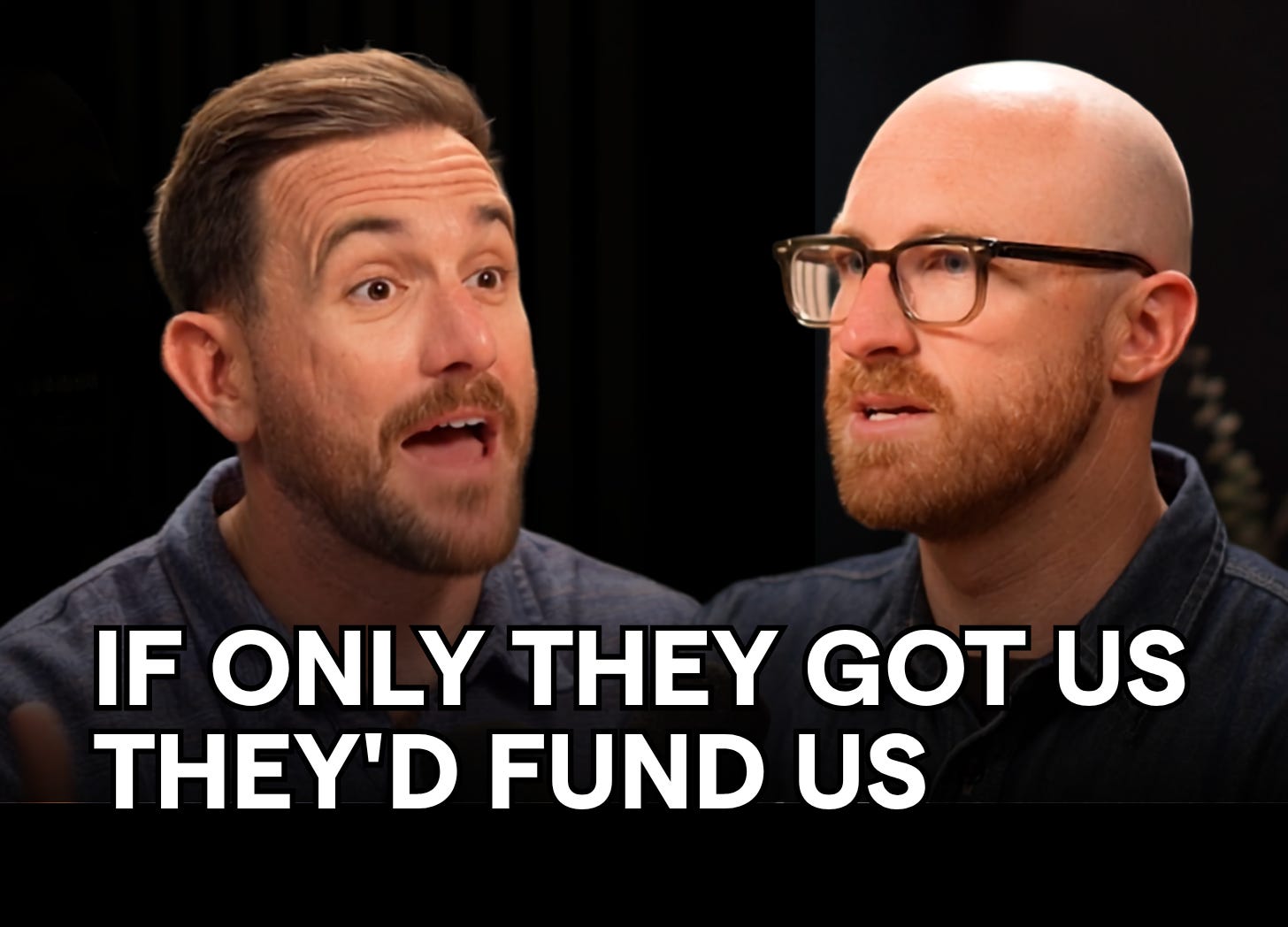
Every nonprofit leader has told themselves some version of the same story. If funders really understood us, they’d fund us. If the community got what we do, the support would follow.
Jonathan knows that story well. Five years into turning the Seymour Center from a quaint aquarium into a hub for coastal resilience, he can feel the distance between the impact the organization actually has and how the community still sees it. When he started, that distance was massive.
I get why the story is so easy to reach for. It puts the problem out there, with the people who don’t get it, and keeps it away from us.
But when a leader says they’re having trouble telling their story, it’s almost never a storytelling problem. The identity underneath it was never made clear. The raw ingredients are usually all there. They’ve just never been combined in the right way.
I call this the identity impact gap. The distance between the impact you actually have and how the people you need to influence understand you. Close it, and funding, talent, and trust all get easier. Ignore it, and you can do great work for years while stalling out.
The uncomfortable part is where the responsibility lands. If the people you need don’t get you, that isn’t their failure to pay attention. That’s your work, still unfinished.
So the question I’d put to any leader who feels misunderstood is this: are you closing the gap between who you are and how you’re seen, or waiting for the world to finally catch on?
Episode Highlights:
[00:01:15] The identity impact gap, defined
[00:02:45] The sector myth: do good work and growth takes care of itself
[00:04:05] Why the gap quietly starves your funding
[00:05:05] The two problems bigger than funding
[00:06:20] The Seymour Center’s own gap, in real time
[00:08:20] Why a widening gap can be a sign of growth
[00:12:50] The three pillars: identity, expression, perception
[00:26:35] How organizations drift into autopilot
[00:27:35] Self-diagnosing: “we’re having trouble telling our story”
[00:30:00] “That’s a you problem”
[00:31:05] Asking funders and partners how they’d actually describe you
[00:38:40] Why trust isn’t built on your 990s
Notable Quotes:
[00:04:50]: “You get the first meeting, but never the second. Or people say, yeah, I kind of get what you do, but you get the sense they don’t really understand it. If only they got us, they would support us.” Eric Ressler
[00:06:20]: “The perception of the community is probably like a quaint little aquarium and science museum that my kids go on field trips to. That’s the long history. And we’re becoming this collaborative center for coastal resilience.” Jonathan Hicken
[00:23:10]: “I would urge orgs to figure out: if there was only one thing that everyone could know us for, what might that one thing be? And do a really good job beating that drum.” Eric Ressler
[00:25:20]: “It has to start with a deep understanding of self. Before you can get to expression, before you can get to perception, you have to know yourself.” Jonathan Hicken
[00:30:25]: “Often you’ll hear orgs and leaders shift the blame towards, well, the funders don’t get it, the supporters don’t get it. And it’s like, look, frankly, that’s a you problem.” Eric Ressler
[00:38:40]: “We got our 990s in order, we got our financial docs. And if that’s where we think trust is built alone, then we’re missing a big chunk of it. This identity impact gap, for me, boils down to trust and trust building.” Jonathan Hicken
Resources & Links:
Seymour Marine Discovery Center — Jonathan Hicken’s organization, used throughout as the working example of an org closing its own gap
Cosmic — Eric Ressler’s studio; the branded strategy and client work referenced throughout
P.S. — Struggling to align your message with your mission? We help social impact leaders like you build trust-building brands through authentic storytelling, thoughtful design, and digital strategy that works. Let’s talk about your goals »
Full Transcript:
Jonathan Hicken [00:00:15]: Alright, Eric. A couple of episodes ago, you floated very loosely this idea of an identity impact gap, and we kind of glossed over it because I’m sure we were talking about something very important. But I remember it stopped me in my tracks, because I related to it so closely. And I wanted to spend today really unpacking this idea, because I think you might be onto something pretty special here. So this identity impact gap, what is it?
Eric Ressler [00:00:30]: So this came from the point of view episode. We introduced it and said, well, I’m sure we’ll do that. So here we are. In short, the identity impact gap is the distance between the actual impact you have as an organization and how the people that you need to influence understand you as an organization.
And basically, my point of view, in my experience, is that the bigger that gap is, the harder it is for you to actually continue to make an impact and grow. And there’s all kinds of other downstream effects too. So it’s who I am as an organization, or who we are as an organization, and what people think of me.
Another way I say this is deeply understanding who you are as an organization, authentically, truly, honestly understanding who you’re becoming as an organization, and then how people understand who you are and who you’re becoming.
Jonathan Hicken [00:01:15]: So I think I understand the fundamental premise of this, and it checks out. It’s like I’m doing some sort of work and I need people to understand that work. Donors, constituents, whatever the people power. And if they don’t understand it, because I’m not communicating it well or for whatever reason, then somehow that’s going to be a problem for me actually doing my work. So let’s unpack that connection. Tell me why that gap actually gets in the way of doing impactful work.
Eric Ressler [00:01:45]: So it shows up in a couple of different ways. The way I think we get here as a sector is because there’s a long-held belief that I’m basically challenging in my assessment here, which is that if we roll up our sleeves and do really good work and we make an impact and we’re really passionate, everything’s going to be okay and we’re going to grow naturally.
Inevitably, of course, what else could happen? But any leader in this space has felt that it’s not quite that simple. And if you want to blame someone for that, it’s basically human psychology, which is that we need to be able to tell compelling, relatable, emotionally charged stories about our work, because so much of how we make decisions as humans comes down to how we think about the world through the lens of story and through the lens of identity.
And that’s how I get here. That’s one of the many reasons why we ended up here. But you asked the question, what does it actually look like? Why is it a problem? Basically, why does this gap exist? And I want to unpack in more detail in a minute how an individual organization gets here.
Jonathan Hicken [00:03:30]: But from my executive director chair, I want to understand: why is this a problem for me?
Eric Ressler [00:03:30]: So the most obvious answer to that is that this is a big problem for people power, and specifically funding. If you are out there and you need funding to support your mission and to make an impact, if this gap exists, it’s going to be a major drag on your ability to do that.
Some symptoms that might show up: you have trouble even getting a meeting with meaningful funders, be that individual high-net-worth donors or institutional funders and philanthropies. Or you get the first meeting, but never the second. Or you get those meetings and people say, yeah, I kind of get what you do, but you get the sense they don’t really understand it, and you feel like they’re just not getting us.
If only they got us, they would support us, right? Those are some of the things that might show up on the funding side. And I don’t want to diminish the funding element, because it’s obviously a really important part of building sustainable organizations and having the resources to meet the scale of the missions that we’re trying to solve.
But I actually think that’s the easy answer. And there are some deeper answers that are, in certain ways, just as impactful from a negative standpoint, if not more so. The second would be your own internal team’s ability to all have clarity on the purpose and the mission and the direction of the organization, and understand their role and their ability and their opportunity to make that happen.
So there’s this internal team alignment and team strategy element to it as well. If this gap exists, it can be a major drag on your capacity, your efficiency, your effectiveness as an organization. So to me, that’s the second major problem. And then the third would be your ability to attract and retain the right team members and the right talent internally, but also with partner organizations or peers or anyone else in your social impact ecosystem. So yes, funding is a major reason for this, but actually those other two are equally, if not more, important.
Jonathan Hicken [00:06:20]: So I’m boiling this down to clarity, and it’s clarity of who I am and everybody else understanding that same thing. And that kind of checks out. Even at the Seymour Center, I feel like we actually have some of this gap right now.
I think it’s closing. But the perception of the community is probably like a quaint little aquarium and science museum that my kids go on field trips to. That’s the long history. And we’re becoming this collaborative center for coastal resilience, which comes with a lot of different work and meaning.
And so when I rolled out this vision and started working on it, that gap was huge. It was massive. And we’re closing that, and people are starting to understand it. But I do remember these early conversations with donors and partners being like, wait, what are you doing?
Eric Ressler [00:07:15]: So you’re describing a very common scenario. And a really important point in this is that I want listeners and viewers to understand that this gap is not a static thing that you close and you’re done. It’s alive, it’s in motion, it’s evolving, and it changes depending on how the world is changing, what the state of play looks like in your ecosystem, and where you’re going as an organization.
So you’re a great example. You come in as a new executive director for the Seymour Center, and you have a new vision for what the organization would be, who you’re becoming as an organization. And I remember, because we’ve been friends and colleagues throughout that whole trajectory, which is about five years, almost to the day.
And I applaud you for this. You came in and you had a vision. You had a hunch. Hunch is good. But you also spent a lot of time getting settled in, listening and understanding. And I think anytime you come in as a new ED, there’s going to be some surprises, right?
Where you sign up for one thing and you’re like, whoa, they’re going to open up the closet and here’s all the skeletons, right? And so that might change your hunt for your strategy. But nonetheless, you came in not to just run this place business as usual. You came in with a mandate to reimagine it.
And so in those moments, of course, the gap is going to get bigger, as it should. And that’s actually a good sign that the gap is big, because what it basically means is that who you’ve been and who you are is very different than who you’re becoming. And that means this gap is going to open, and you need to do some things to close it in order to reach those goals and bring the people along who you need alongside you to make sure you can actually do it.
Jonathan Hicken [00:09:00]: Yeah, in a way. Fundamentally, the gap doesn’t always necessarily mean you’re totally screwed, right? It doesn’t mean your organization is going to fail. This is not a terrible thing, necessarily. In fact, you can create that gap strategically. You can create that gap with a purpose, as long as you’re closing it.
Eric Ressler [00:09:25]: Right. And as long as you’re doing the work to close it, you can create that gap deliberately, which is kind of what I did. And you should create those, because really, the gap in its best form is a sign of growth or a pivot in a meaningful way. If there’s no gap ever, you’re basically just stalled out.
Jonathan Hicken [00:09:45]: I was trying to imagine, is there a version of this where someone is totally transforming and that gap never widens? I think the best version of this is that you, as a leader, are intentionally creating big gaps and then filling them and then creating the next big gap, meaning either you’re making a major pivot or a major growth move as a strategic choice, and then you’re doing all the right work to ensure that you’re bringing people along on that journey.
And that’s healthy, which is why I think it’s very important to say the gap can be a problem, but only if you’re not acting on it. I sometimes think of my job as being a problem maker, which is weird, right? In my role. But just to give you an example, we rolled out this new exhibit, it’s largely digital.
The problem being that we can rotate the content that’s in that exhibit regularly. And in doing that, I created a problem for the organization, which was, now we’ve got to create the content to get it in there. But I created this problem that, once we solve it well, we’ll have tremendous power. But anyway, creating this gap, the identity impact gap, especially during moments of transformation, can be a deliberate choice, as long as you’re prepared to then close it.
Eric Ressler [00:11:05]: So here’s a metaphor that maybe will work for folks. Let’s say you have some major health goals. Maybe you want to lose weight, or gain a certain amount of muscle, or you want to be able to run a 5K in X number of minutes. That’s a strategic goal that you set out.
And by setting that goal, there’s immediately a gap or a void that gets opened, which is, well, I can’t, I’m not that yet. So people have this perception of me as being slow or overweight or not muscular, whatever the delta is there. And then there’s a set of choices that you have to make. There’s a burden that you have to fulfill to make the changes and the choices that you have to make in order to reach that goal.
Jonathan Hicken [00:11:55]: Right. So anytime you’re going to make a major change, as an individual or as an organization, by necessity it’s going to create a lot of new activities and needs and responsibilities to get there. And I am going to belabor that metaphor, because I think there’s something to it, where it’s like, okay, I actually happen to think I’m about 10 pounds overweight right now.
I want to lose 10 pounds, for my weight goals. And so I’ve created this gap. My goal is to lose 10 pounds. And you kind of laid out that there are three parts of this. It’s like who I am, how I express it, and how other people receive it. So to use this metaphor: who I am is 10 pounds overweight. How I’m expressing it is maybe the choices I’m making to get healthier. And then, does everybody else around me perceive me as healthy and fit?
I think that generally works. Let’s break down those pillars in a little bit more detail.
Eric Ressler [00:12:59]: That would be helpful. So I think about them as, you basically use the pillar words. The first is really identity. Another way to think about that would be strategic clarity. It’s just, who actually are we? And what I find is that orgs can get there on their own sometimes. And what I mean by that is, often if you ask an org or a leader, there are a lot of different ways they might answer, depending on where they are in their growth as an organization.
So early on it might be, oh, well, we’re just getting started. We don’t actually know who we are. We have a thesis about who we are, or there’s usually some kind of problem that you are trying to solve when you start a social impact organization. And usually when you first start, the problem is pretty small and pretty specific, in most cases, not always.
Sometimes people will start with big audacious goals to do XYZ, right? But then that shifts over time. So you might have a lot of strategic clarity early on, but that might change, because the conditions of the world change, or the conditions of the fundraising ecosystem change, or the conditions of your particular issue area change. That initial strategic clarity and identity may also need to change.
And I think that happens more than we want to admit in this sector. We get stubborn sometimes in our missions, in our visions and who we are. And we don’t think forward enough about what does the mission actually need right now and how can we best serve that mission. So that’s one pillar. The second pillar is expression, which is, once you have that strategic clarity, how are you expressing it internally and externally to the people that matter for your mission?
And this comes into everything from brand identity and visual communication to your overall marketing communications, to the way you present in meetings, to the way you talk to your team. How are you expressing and articulating that strategic clarity, that identity, and how are you doing that consistently enough and compellingly enough that it sticks?
Because that leads to the third, which is, how are you actually understood and perceived? Because if those first two aren’t strong, you will be misunderstood or missed entirely, or perceived inaccurately or not fully. So people won’t really understand exactly who you are. People won’t really understand what your true impact is. People certainly won’t understand what your impact potential is, what you might do if X, Y, and Z were true.
And so you can start to see how these three elements reinforce one another, and that by strengthening them, it starts to get this flywheel effect.
Jonathan Hicken [00:15:35]: And I can see how actually this gap could erode trust. It could be proactively eroding trust.
Eric Ressler [00:15:55]: Right. Because inherently we make a promise as organizations, either to a donor or to a constituent or to whomever, or a partner. And if that promise is perceived differently than the promise we think we’re making, then whatever we’re delivering is going to not fulfill the expectation of that particular audience. Well, I think what you just described is a perfect example of where maybe the strategic clarity is good, or the identity is good, but the expression of that identity is not being done well.
So people have attached themselves and their understanding to your old identity. You’ve got a whole new idea, and maybe you can relate to this. The Seymour Center: a whole new vision, a whole new understanding internally around who you’re becoming. But the people that you want to influence and that you need to support your mission don’t understand that, because it’s not been communicated well or consistently enough.
So they’re like, wait, I thought the Seymour Center was a cool coastal museum for my kids to come to. And you’ve got this bigger idea, this much bigger idea. So I think, frankly, you are dealing with that perception shift, and you’re doing a good job at addressing it in many ways. But I would guess that there’s a number of people in our community who don’t know the new story of the Seymour Center yet.
Jonathan Hicken [00:17:20]: Yeah, that’s for sure. And one question I have for you is, when you talked about the expression piece, you’re talking largely about marketing and outward communications.
Eric Ressler [00:17:20]: I think outward communications is certainly a big part of it. But it’s also any touchpoint, any opportunity where people are learning about your organization, which, yes, is often going to happen through your brand and your website and your marketing communications, but it’s also happening every day when you’re out talking to people.
When you’re just doing your work, when your board member is, or when a visitor is telling the story of the Seymour Center. Are they telling your story of the Seymour Center, or are they reinforcing an old one of a cool aquarium for kids on the West Side?
Jonathan Hicken [00:18:05]: I just want to be clear, is this an equation? Like identity, self, sense of self, plus or times expression equals perception. Or do these three pillars move and act independently of one another?
Eric Ressler [00:18:05]: It’s a little bit of both. I’ve never thought about it that way, in terms of the equation, the way that you just laid it out. But it’s not wrong necessarily. Because tease that out a little bit: if you do the work to really have strategic clarity and understand yourself at an identity level, which I think we should spend more time talking about, and you do a really good job with your expression of that, the understanding, the perception of your organization is going to improve and be aligned.
And so it is sort of that simple, if you really want to distill it. But I could also imagine perception shifting without those two pieces of the equation moving much at all. The world could change. Circumstances can change. Your community or your constituents themselves may change. And so, in real time, I’m realizing that’s not a dependent variable, to use the statisticians’ term.
Jonathan Hicken [00:19:15]: Right, that’s the way I think about it. This is a very fluid thing that you should be considering at all times. And so a fundamental takeaway for me is I should be constantly aware of these things. At minimum, I need to be honing my awareness for who we are and who we’re becoming, how we’re communicating that, and how the community is perceiving it. I need to have my finger on those pulses at all times.
Eric Ressler [00:19:40]: And my sense is that a lot of orgs often fail at that last step, which is how are we perceived and how are we understood. Because what we see a lot of times when working with clients on branded strategy work is that orgs will have a sense of how people perceive them.
But when we independently interview those same people, they have a very different story. And it just happens for a lot of reasons. Sometimes people don’t want to hurt your feelings, so they tell you something and they tell us something else. Or you just haven’t asked in a long time and you’re making a lot of assumptions in this space.
Jonathan Hicken [00:20:20]: Is this something that’s unique to this line of work?
Eric Ressler [00:20:35]: I would say yes and no. I think this same identity impact gap could apply to any corporate startup or any business or any organization. But I think what does make it distinct is that in the corporate world, the people that you need to support you and the people that you are communicating with are the same people often, right?
You are selling a product to customers. And so there’s a lot of work done around customer and user understanding and surveys and so on. Our work is often a little bit more complex than that, in the sense that the people who are funding the work are often not the same people that you are helping. Or even if you are a social enterprise and you are selling products, there are just more stakeholders and there’s more complexity in the overall ecosystem, because you are not just trying to make money or to earn income and revenue.
You are also trying to create an impact. And there are a lot more players. And so the story is a little more complex. So I do think at a high level it works. But I think our framework is definitely tailored specifically to social impact organizations.
Jonathan Hicken [00:21:45]: It begs the question. You mentioned funders and constituents as these two audiences. So the identity impact gap could be different for each of those two audiences. Or the distance of that gap could be different for those two audiences.
Eric Ressler [00:21:45]: Absolutely. And what I think you will see often is that even the story that you tell your less concrete constituents or your beneficiaries, the people you are helping, they may have a slightly different understanding of your identity than someone who’s a deep funder or partner or board member.
And I think that’s okay to a degree. And actually, I’m glad we went here, because I’ve been thinking about something a lot lately. One of the things we deal with in our client work a lot is that people feel like they’re having trouble telling their whole story, because they’re trying to tell, oh, we do this, but we do this too, and this is really important.
And here’s why. These stories get really complex, really fast. That’s just the nature of doing social impact work at some level. It’s the nature of doing, especially, systems-level work, where you do see how your role in the ecosystem affects everyone else’s role. And as an org doing this work, you can see that clearly, because you live it every day.
And I think that leads to a sense of, well, we must tell our whole story. And I actually think that can be a problem, because if that story gets so complex, you’re having a hard time telling it. And I would actually urge orgs to be really good about figuring out, if there was only one thing that everyone could know us for, what might that one thing be?
And do a really good job beating that drum, because getting people to understand who you are is hard enough when the story is simple. But when the story is complex, forget it. And that actually reminds me of you. Here I go, slamming strategic plans again. But when we try to shove everything into a strategic plan or a mission statement or something, it gets off the rails quickly. And this is another example of that.
And on the mission statement or the vision statement thing, my sense is a lot of orgs think they do have that strategic clarity. Well, we have a mission statement. We’ve got our vision statement. We’ve got our strategic plan. We’re doing all the right things. But I think there’s actually a really big difference between those motions and actually having strategic clarity.
And this boils down to, in our sector, we are on our best behavior. We’re trying to do the right things. We’re trying to do the best practices, and having a strategic plan and having a mission and vision statement, all best practices. And look, I’m not saying you shouldn’t have all those things. All I’m saying is we work with a lot of orgs that have all those things, that have done that work, and they’ve done it well, and they still don’t have strategic clarity, and they still don’t have clarity from the people that they need to support their mission.
Jonathan Hicken [00:24:55]: So we’re using the word clarity. We’re using this word awareness. And this just makes me draw a parallel to almost like self work, like almost therapy-style work, of being aware of who I am and how I show up and my impact on others around me, this deep sense of self. And to me, that’s kind of what you’re describing here.
It has to start with a deep understanding of self, in my opinion. Before you can get to expression, before you can get to perception, you have to know yourself.
Eric Ressler [00:25:20]: So 100% agree. And I would also say that this is why I use the word identity. It’s not just because I’m a brand guy, but to me it really does come down to organizational identity and even, to a degree, individual identity from the leadership team.
And I also think about this a lot as, identity is kind of upstream of all these other things, because if you don’t have that identity piece solid, and let’s use your example or your metaphor, personal work: if you don’t know who you are deeply, and you’re not honest about that, and you don’t do the deep work, even work with the professional to figure some of that stuff out.
How can you possibly know who you want to become and who you should become and where, because you don’t even really know where you’re starting from. And so you can delude yourself, and I think we do this individually, and I think we do this at an organizational level, into, well, we’re this kind of org.
And you create these belief systems about who you are. But if they don’t match reality, you’re deluding yourself at some level. There’s this sense of almost autopilot, right? That you can go on as a person and you just get through your day. You just go through the motions, and you can lose sense of that identity. And the same thing happens for organizations. You can just click into autopilot mode.
Sometimes you can be on that track for years without revisiting some of these questions. And then what’s happening is this gap is growing and you’re not aware of it. And so you’re spinning out, you’re stalling out, you’re feeling like there’s a loss of momentum, or like you’re just going through the motions. I’ve felt like this running Cosmic before.
Jonathan Hicken [00:27:20]: Many times I’ve felt like this individually before, where sometimes you’ll just have a moment of clarity and you’re like, what am I going to do? This is who I want to be. Or as a board. So I think that metaphor holds up there for me. So how do I know, first of all, that I have the gap? For listeners who are trying to self-diagnose right now, where do we look first?
Eric Ressler [00:27:45]: So I would say that most people are aware there’s a problem. They’re not going to think about it in this identity impact gap framework, because they haven’t heard of it yet. But what we hear people say is, we’re having trouble telling our story. It’s one of the most common things that people come to us with.
And that, honestly, is usually not only a storytelling problem. The problem there is not usually that their identity is perfectly solid, their strategic clarity is fully dialed in, everyone’s aligned on their team, and they just have no one who can tell that story. That very rarely happens. I’ll just tell you, it does every once in a while.
And I’m not saying storytelling isn’t an art, it is. But usually, again, identity is upstream of that. So usually the reason people are having trouble telling that story is because they haven’t done that identity work properly. They’re usually 70% of the way there on their own or so, and they kind of call it good at that point.
And they haven’t done the deeper work of really getting true and clear about the distinction of what really actually does set us apart, what is the unique role in our ecosystem that we can fully name and claim? And how do we articulate that, what is our actual secret sauce and best offering, and what can we do in a way that no one else can do it in this sector?
That kind of deep work that people, I think, oftentimes over-index on. Well, the problem is real and worth solving. We’ve had some impact. Our team is really passionate about this work. Great. All those things are amazing. Please never turn those things off. But that’s not enough to have strategic clarity or to be differentiated as an organization.
And so I think you have to build on top of those things and really get honest and clear about your strengths and your weaknesses, and then figure out which of those are worth addressing, which are worth leaning into, what things might be worth shedding. So to me, when people come to us and they say we’re having trouble telling our story, that’s a big red flag. There’s probably some identity issues.
I think the other thing that people might find is, people don’t get us. People just don’t seem to understand who we are. They have trouble understanding our work. They have trouble understanding our impact. Half the time, our team doesn’t even tell our story the same way. Our board doesn’t even know what we do.
Jonathan Hicken [00:30:00]: These would be signs to me that there’s a pretty big gap. Something that I’ve heard on other nonprofits I’ve worked with, other boards I’ve served on, is this the classic, if only everybody understood, imagine what would be possible? And then there’s the accountability piece, where often you’ll hear orgs and leaders shift the blame towards, oh, well, the funders don’t get it.
Eric Ressler [00:30:25]: Yeah. Oh, the supporters don’t get it. They don’t see it. It’s like, look, frankly, that’s a you problem. If they don’t get it or see it, maybe it’s because there’s not anything there. Or the way it’s there is not, what I often see is a lot of the raw ingredients are there, but they just haven’t been combined in quite the right way.
Jonathan Hicken [00:30:45]: So those are some of the times I’ve seen it. And so I’m still thinking about the Seymour Center case, and how do we continue to close the gap. And actually the podcast I launched for the Seymour Center is part of that. And some of the new exhibits we’ve put up are part of that.
But I’m starting to think, how do I close that gap in the best way possible? Where do I start? We’ve talked about identity, and for most of us it starts there, doing that deep sort of inner organizational work. But what other tools in the tool belt are there to start to close the gap?
Eric Ressler [00:31:25]: I think a big one that I see a lot of people miss is that perception and understanding piece: how are we actually perceived by the people that we need to bring alongside us to do our work? And this can be easier for us to do than internal orgs, but having conversations that are honest, and asking people, hey, how do you think about our work?
If you had to describe us to a colleague, how would you describe us? And just get a sense of the way that other people articulate who you are, which is almost more important and more powerful than how you do it. And actually, sometimes other people are going to do a better job at articulating that. We often will do interviews and it’s like, that’s gold.
We’re going to take that and embed that in the narrative. And we do this both internally and externally. So ideally, if you wanted to try and repeat some of our processes in-house, you would go have conversations with your funders and conversations with your partners and conversations with your staff. But you have to be careful about how you do it.
Because if you don’t do it right, people don’t want to insult you, people don’t want to bring you down. And so you have to come in and say, hey, look, we’re actually having trouble with this right now. And the best way that you could support us would be to be fully transparent.
We’ve got thick skin. Let’s talk about, who are we? What are our strengths? What are our weaknesses? Where do you see us being better than anyone else, or being best served or best fit for this role? Where are you confused? Where are you legitimately confused about what you’re not aware of? Did you realize this?
These kinds of open-ended conversations, where you become fully present and open, a deep listener, and then you start to look for patterns and start to see, well, everyone has a slightly different story of who we are, or everyone gets this part but doesn’t understand this part. Is that good? Is that bad?
Do we want to really be known for that part? It’s okay that no one knows about this program that’s super impactful, but if we tried to weave it into our narrative, we just make it confusing and convoluted. And that’s where it becomes a little bit of an art and not just a science. I can imagine there’s a little bit of danger in there too, right?
Where, especially in a funding situation, you run the risk of introducing some doubt. And this is maybe where having an outside partner or vendor to help do the work might actually help, because then you’re not unintentionally presenting doubt to a funder. You could see that, right?
Hey, I don’t know, who am I? Who do you think I am? It’s totally sensitive. And the way that we approach that, being third party helps, for sure. But also, we usually interview funders who are deep partners, who are almost embedded to such a level of partnership that they’re basically part of the team.
They want to see the org grow, and they know this is going to help them do that. Or funders who have not funded but have had meetings, that can be gold. Like, why not? Why didn’t you? So in the aggregate, how did we collectively get here, and what is the impact if we collectively solve it?
I mean, we touched on it briefly, but I really do think the main reason we get here as a sector is two things. One, this long-held belief that I don’t think is true, that if we do good work, everything will work out. If you build it, they will come. And it’s just not how the world works.
And there may be some edge cases where that was true. But if you start to peel back those case studies, you’ll realize that they were all really good at this identity and that gap. So that’s one strongly held incorrect belief in the sector that I hope we can start to shift the narrative around, and not in a way that I want to bring people down, just, hey, let’s be pragmatic about this.
This is not how the world works. So let’s understand that and use it skillfully. And then the second, related to that one, is passion. There’s a lot of, we’re doing good work, we’re doing meaningful work, and we’re passionate about it. And so that passion can actually become a problem. If that means you’re hiring people because of their level of passion and not necessarily the skill level that’s needed on the team. Or people can see a really passionate person and want to let you down easy, and don’t actually give you the harsh feedback that would help you grow.
That shows up in a lot of different ways. And there’s really not incentives for anyone other than you as a leader to fix this problem. And so you get into this autopilot mode where you’re putting fires out, you’re just going for the next grant. You’re working on this program, you’ve got a team problem.
And it takes stepping back and doing this work fully. It’s a big major move. And so I’m also not suggesting that you do this every day. I think you should have a pulse on it every day. But there are times in your natural growth cycle where it’s time to sit down and really do this work deeply.
And I think that’s probably true of personal work too. I don’t think reinventing yourself every week is sustainable. You’ve got to do this work in seasons, where it’s like, okay, I’m going to become this next version of myself, and here’s how I’m going to get there. And then you do the work every day to get there.
And so, let’s imagine a world in which we collectively solve this. We all collectively close the identity impact gap. Let’s imagine that world together. How does the sector change? If we’re in that imaginative state, funders and organizations paired perfectly, and those resources are there and significantly more effectively deployed, because we are funding the right org for the right job at the right time.
That org knows themselves so well that they are not just efficient, but highly effective in their work. Hopefully what I would see as a downstream effect of that would be more dollars into the sector, because there’s more proof of impact, there’s more confidence in the space, and we start to actually solve some of these problems that we’ve been trying to solve, sometimes for decades, if not centuries, or problems that are arising right now, because there’s no shortage of new problems being solved all the time.
So, in short, the sector at large becomes significantly more impactful, significantly more effective. And I would even argue much more joyful to be part of, and I would say more trusted. There’s the, I kind of talked about how this gap probably leads to eroding trust. And so if we’re all doing that to a certain degree in the sector right now, then in a sense it’s, yeah, no wonder there is a mistrust of the sector from some people right now.
And so the question really is to you: what happens to the sector when trust rises? And I think you answered that, which is, more money flowing in. Because otherwise, you could have the most perfect fit between funder and fundee possible, but if it’s the same dollars and cents in the system, then what are we even really doing?
Jonathan Hicken [00:38:45]: Exactly. That starts to get into bigger topics around spend-down and how philanthropy should be part of society at large. And I love going deep and esoteric on those things. But at the end of the day, how much control do you have over those things, unless you’re an org that is specifically working on trying to change the sector at large? Put your effort towards fixing this gap, and it’s going to be significantly more pragmatic and effective for you. And then you can deliver on your impact at a higher level.
Eric Ressler [00:39:05]: Yeah, man. You know, this trust thing, I’m stuck on that, because we think about trust as, how do we earn trust? We got our 990s in order and we got our financial docs. And of course we need those, because that’s preventing fraud, and I’m for that. And if that’s where we think trust is built alone or demonstrated, then we’re missing a big chunk of it. And I think this identity impact gap, for me, boils down to trust and trust building.
Jonathan Hicken [00:39:50]: I think that’s a strong takeaway. And I think that if you do it well, it’s going to help you earn that trust, and to deserve it, and to do it more fully. So yeah, I would agree. And I think, at the end of the day, you are making a promise to the people on your team and outside of your team, and the people that you’re helping, why you exist as an organization, the impact that you’re going to deliver.
And the more that you can actually do that and articulate that clearly and be really clear about that yourself, it just makes everything work better. Anything else we need to know about the identity impact gap that we haven’t touched on? I’m sure we’re going to do some follow-up episodes on this one, but I feel like we hit it pretty good for today.
Eric Ressler [00:40:25]: So, yeah, thanks for digging into it with me.
Jonathan Hicken [00:40:25]: Yeah, this is awesome. Thanks, Eric.